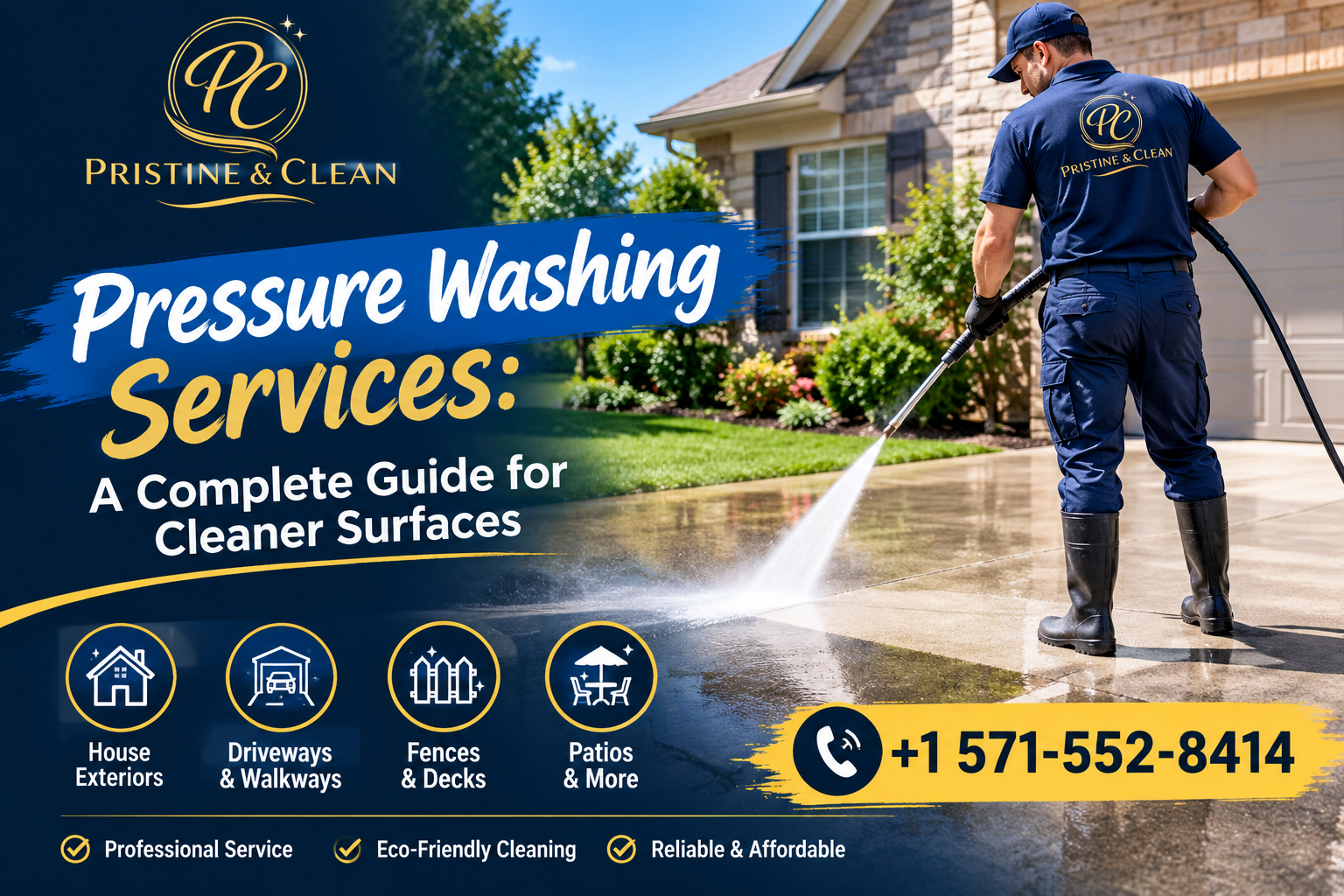
Pressure Washing Services can quickly refresh outdoor surfaces by removing built-up dirt, grime, algae, stains, and other unwanted deposits. For homeowners and businesses, professional pressure washing can improve the appearance of driveways, patios, sidewalks, decks, exterior walls, and other hard surfaces.
At Pristine and Cleaning, the goal is not simply to make a surface look cleaner. Proper surface cleaning requires choosing an appropriate pressure level, method, equipment, and cleaning approach for the material being treated.
What Are Pressure Washing Services?
Pressure washing uses pressurized water to clean durable exterior surfaces. Depending on the surface and the type of buildup, professionals may use different pressure levels, nozzles, detergents, and cleaning techniques.
Common applications include:
- Driveways and walkways
- Patios and concrete surfaces
- Exterior walls
- Decks and fences
- Parking areas
- Outdoor stairs
- Commercial building exteriors
- Other suitable hard outdoor surfaces
The correct approach depends on the material. Concrete can generally tolerate more pressure than delicate wood, painted surfaces, or certain exterior finishes. Using excessive pressure can damage surfaces rather than improve them.
Why Pressure Washing Matters
Outdoor surfaces are exposed to rain, humidity, dust, vehicle traffic, foot traffic, and changing weather conditions. Over time, these factors can leave behind layers of dirt and organic growth.
Professional pressure washing can help remove:
- Dirt and mud
- Algae and mildew buildup
- Surface grime
- Certain stains
- Loose debris
- Atmospheric deposits
- Some oil-related residue from appropriate hard surfaces
Regular exterior cleaning can also make properties look more maintained and presentable. For commercial properties, clean entrances, sidewalks, and exterior areas can contribute to a more organized appearance for customers and visitors.
Pressure Washing Services for Different Surfaces
Not every surface should be cleaned in exactly the same way. A professional should evaluate the material before beginning.
Driveways and Concrete
Concrete driveways can accumulate dirt, tire marks, organic growth, and other stains. Pressure washing can help restore a cleaner appearance and remove surface buildup that ordinary rinsing may not handle effectively.
Patios and Walkways
Patios and walkways often collect dirt, leaves, algae, and other outdoor debris. Cleaning these areas can make outdoor spaces look fresher while helping remove slippery organic buildup.
Decks and Fences
Wood requires more care than many concrete surfaces. Excessive pressure can damage wood fibers, create visible marks, or contribute to surface deterioration. A lower-pressure cleaning approach may be more appropriate depending on the condition and finish.
Exterior Walls
Building exteriors can collect dust, dirt, and atmospheric deposits. Pressure washing may be suitable for some exterior materials, but the cleaning method should be selected according to the siding, masonry, paint, or other finish.
Pressure Washing vs. Power Washing
The terms pressure washing and power washing are often used interchangeably, but there can be a technical difference.
Pressure washing primarily uses pressurized water. Power washing generally refers to equipment that also heats the water. Hot water can be useful for certain types of grease and heavy buildup, while standard pressure washing may be suitable for many routine exterior cleaning applications.
The appropriate method depends on the surface, soil type, cleaning objective, and equipment available.
When Should You Consider Pressure Washing?
There is no single schedule that works for every property. Cleaning frequency depends on climate, surface type, surrounding vegetation, traffic, and how quickly dirt or organic material accumulates.
You may want to consider professional cleaning when:
- Driveways have visible dirt or stains.
- Walkways have accumulated grime or algae.
- Patios look dull or heavily soiled.
- Exterior walls have noticeable buildup.
- A property is being prepared for sale.
- Outdoor areas need cleaning before an event.
- A commercial property requires routine exterior maintenance.
Rather than waiting until surfaces become heavily soiled, periodic cleaning can make exterior maintenance easier.
How Professional Pressure Washing Works
A quality cleaning process involves more than simply pointing a pressure washer at a dirty surface.
1. Surface Inspection
The cleaning professional first evaluates the surface, its material, condition, stains, and surrounding areas.
2. Preparation
Furniture, decorations, vehicles, and other items may need to be moved or protected. Nearby areas are assessed for potential water exposure.
3. Selecting the Cleaning Method
The appropriate pressure, nozzle, water flow, and cleaning solution are selected according to the surface.
4. Surface Cleaning
The technician works systematically across the area, maintaining an appropriate distance and spray pattern to clean the surface without unnecessary damage.
5. Final Rinse and Inspection
After cleaning, the area is rinsed and checked to determine whether additional treatment is appropriate.
This structured approach helps distinguish professional surface cleaning from simply using maximum pressure.
Can Pressure Washing Remove Mold and Algae?
Pressure washing can remove visible buildup from some exterior hard surfaces, but it is important to understand that cleaning and mold remediation are not always the same thing.
The CDC recommends removing visible mold and addressing the underlying moisture problem rather than simply covering or ignoring mold growth.
For exterior surfaces, the appropriate cleaning method depends on the material and extent of growth. Heavy or unusual mold contamination may require additional assessment rather than relying only on high-pressure water.
Is Pressure Washing Safe?
Pressure washing equipment can be highly effective, but the spray can also cause serious injuries. The CDC advises following the manufacturer’s instructions and keeping people away from the spray area. Gas-powered equipment should also be used outdoors and away from doors, windows, and vents because of carbon monoxide risks.
Professional operators should therefore consider:
- Appropriate protective equipment
- Safe operating distance
- Electrical safety
- Nearby people and pets
- Surface-specific pressure levels
- Proper equipment handling
- Safe management of wastewater
This is particularly important when cleaning large areas or working around buildings.
Responsible Water and Runoff Management
Pressure washing can move dirt, sediment, oils, and other contaminants from surfaces into wastewater. EPA resources explain that stormwater can carry pollutants from hard surfaces into waterways and storm drains.
Local requirements for pressure-washing wastewater can vary by jurisdiction. Responsible service providers should consider where wastewater is going and take appropriate steps to prevent contaminated runoff from entering storm drains or waterways.
This is an important part of professional exterior cleaning that is sometimes overlooked.
DIY Pressure Washing or Professional Service?
Some homeowners choose to rent or purchase pressure washing equipment. While DIY cleaning can be suitable for certain straightforward jobs, professional services can be useful when surfaces are large, heavily soiled, delicate, elevated, or difficult to access.
The main issue is not simply how much pressure the machine can produce. The key is using the right amount of pressure for the specific surface.
Too little pressure may leave buildup behind. Too much pressure can damage paint, wood, masonry, joints, or surface finishes.
For homeowners who are uncertain about equipment settings or surface compatibility, professional assessment can reduce the risk of accidental damage.
Benefits of Professional Pressure Washing Services
Professional exterior cleaning can provide several practical benefits:
Improved appearance: Removing accumulated grime can make outdoor surfaces look noticeably cleaner.
Surface maintenance: Routine cleaning can remove layers of dirt and organic buildup before they become more difficult to address.
Time savings: Professionals can clean larger areas efficiently with commercial equipment.
Surface-specific methods: Different materials can require different cleaning techniques and pressure levels.
Convenience: Homeowners and business owners can avoid storing, transporting, and operating heavy cleaning equipment themselves.
For properties in Virginia and Maryland, seasonal weather can make exterior maintenance particularly important. Pristine and Cleaning can help property owners address routine outdoor cleaning needs with a practical, surface-conscious approach.
How Often Should You Pressure Wash?
The ideal frequency depends on the property. A home surrounded by trees may develop organic buildup faster than a property in a dry, open area. Commercial properties with heavy foot traffic may also require more frequent cleaning.
Instead of following a rigid annual schedule, inspect exterior surfaces regularly. If dirt, algae, stains, or noticeable buildup begins affecting appearance or usability, it may be time to arrange professional cleaning.
FAQs
What Do Pressure Washing Services Include?
Pressure Washing Services generally involve cleaning suitable exterior surfaces with pressurized water and, when appropriate, cleaning solutions. Common applications include driveways, sidewalks, patios, decks, fences, and selected building exteriors. The exact service depends on the material, condition, buildup, and cleaning requirements.
How Often Should I Use Pressure Washing Services?
The frequency depends on surface type, weather exposure, surrounding vegetation, traffic, and visible buildup. Some properties may need seasonal cleaning, while others may only require occasional service. Regular inspection is a practical way to determine when Pressure Washing Services may be useful.
Can Pressure Washing Remove Mold and Algae?
Pressure washing can remove visible organic buildup from many suitable exterior surfaces, but it does not automatically resolve every mold problem. The CDC recommends removing mold and addressing moisture sources. For significant contamination, additional professional assessment may be appropriate.
Is Pressure Washing Safe for Every Surface?
No. Pressure levels should be selected according to the material and condition of the surface. Concrete may tolerate stronger cleaning than wood, painted surfaces, or delicate finishes. Using excessive pressure can cause damage, which is why surface inspection and appropriate equipment settings are important.
Conclusion: Keep Your Property Looking Clean
Pressure washing Services is a practical way to remove accumulated dirt, grime, algae, and other deposits from many exterior surfaces. However, effective cleaning is about more than using high pressure. The right equipment, pressure level, cleaning method, surface knowledge, and wastewater practices all contribute to a responsible service.
Pristine and Cleaning provides professional cleaning solutions designed to help homeowners and businesses maintain cleaner, more presentable exterior spaces. If your driveway, patio, walkway, building exterior, or other suitable surface needs attention, consider scheduling a professional assessment.