


Introduction
Deep Kitchen Cleaning is an essential part of maintaining a clean, hygienic, and comfortable home. While regular kitchen cleaning removes visible mess and everyday spills, deep cleaning focuses on areas that often get overlooked, including appliance interiors, cabinet surfaces, backsplash tiles, grout lines, and hard-to-reach corners.
Over time, grease, food particles, dust, and moisture can build up around cooking equipment and food preparation areas. Without a consistent cleaning routine, these deposits can become difficult to remove and may contribute to unpleasant odors and unsanitary conditions.
For homeowners and busy families, understanding how to deep clean a kitchen makes everyday maintenance easier. Pristine and Cleaning helps readers understand practical cleaning methods, effective routines, and the value of professional cleaning services when a kitchen needs extra attention.
This guide explains how to deep clean your kitchen, which areas deserve priority, which supplies to use, and how to maintain a fresher kitchen throughout the year.
What Is Deep Kitchen Cleaning?
Deep kitchen cleaning is a detailed cleaning process that addresses grease, grime, food residue, and dirt in areas that routine cleaning may miss. It involves cleaning visible surfaces and less accessible spaces around appliances, cabinets, fixtures, and flooring.
Unlike daily kitchen cleaning, which usually includes wiping counters, washing dishes, and sweeping the floor, a deep clean involves more time and attention to detail.
Typical tasks include:
- Degreasing stovetops, range hoods, and backsplash surfaces.
- Cleaning the inside and outside of suitable kitchen appliances.
- Wiping cabinet doors, handles, and accessible interior shelves.
- Scrubbing sinks, faucets, and areas around drains.
- Cleaning floor edges, grout lines, and corners.
- Removing crumbs, dust, and food residue from overlooked spaces.
The exact cleaning process depends on the kitchen’s size, condition, appliance materials, and household needs. A well-planned routine helps address buildup while protecting delicate finishes and surfaces.
Why Is Deep Kitchen Cleaning Important?
A clean kitchen supports food preparation, improves comfort, and makes household maintenance more manageable. Regular attention to hidden and frequently touched areas can also help prevent stubborn buildup.
1. Helps Maintain Kitchen Hygiene
Kitchen counters, cutting boards, sinks, and utensils can become contaminated during food preparation. Washing surfaces with appropriate cleaning products helps remove dirt and many germs.
The U.S. Department of Agriculture’s Food Safety and Inspection Service recommends washing kitchen surfaces that contact raw meat, poultry, seafood, and eggs before using them for other foods.
Food Safety and Inspection Service
2. Removes Grease and Stubborn Residue
Cooking oils and airborne grease can settle on range hoods, cabinets, backsplashes, and nearby walls. If left unattended, this residue attracts dust and becomes more difficult to remove.
A suitable kitchen degreaser and a non-abrasive cloth can help loosen grease without unnecessarily damaging finishes.
3. Reduces Unpleasant Odors
Food scraps in bins, residue around drains, spills beneath appliances, and forgotten items in the refrigerator can contribute to bad smells. Deep cleaning addresses these sources rather than simply masking the odor with fragrances.
4. Supports Better Kitchen Organization
Cleaning cabinets, drawers, and pantry shelves gives you an opportunity to remove expired food, organize cooking supplies, and identify items that need attention.
5. Makes Routine Cleaning Easier
Once accumulated grime has been removed, daily maintenance generally requires less effort. Wiping counters, cleaning spills, and sweeping regularly can help prevent another major buildup.
How to Deep Clean a Kitchen Step by Step
A systematic approach helps you clean efficiently without repeatedly working on the same areas. Before beginning, gather your supplies, protect food, and check the manufacturer’s care instructions for appliances and surfaces.

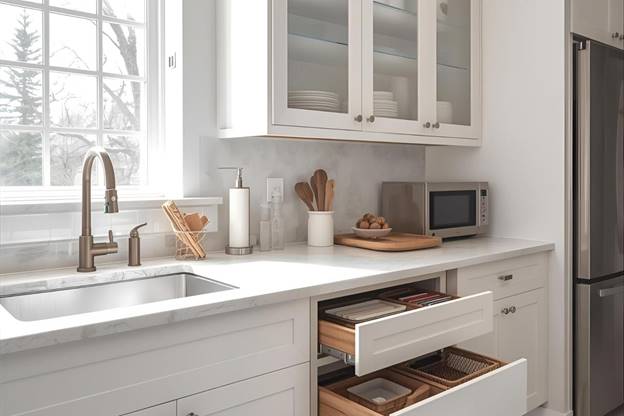
Step 1: Clear the Counters and Remove Clutter
Put away dishes, small appliances, food containers, and cooking ingredients. Dispose of rubbish and move items that do not belong in the kitchen.
Clearing the work surfaces allows you to reach corners and clean the entire countertop. Remove pantry items from shelves only as you are ready to clean those areas, so food is not left exposed unnecessarily.
Step 2: Clean Cabinets, Drawers, and Handles
Dust cabinet tops where accessible, then wipe cabinet doors, handles, drawer fronts, and exposed shelves with a product suitable for the finish.
For greasy areas near the stove, use a compatible degreasing product and follow its label directions. Avoid soaking wooden cabinets or using abrasive pads that may scratch painted, laminated, or polished surfaces.
If you’re also working on garage cleaning and organization, use the same general principle: remove unnecessary clutter before cleaning, then return items to clearly defined storage areas.
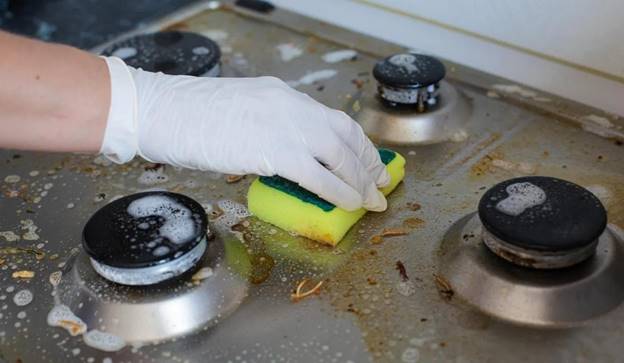
Step 3: Degrease the Stove and Range Hood
The stovetop and range hood often collect stubborn cooking residue. Allow the appliance to cool completely before cleaning.
Remove detachable parts only as directed by the manufacturer. Clean compatible surfaces with an appropriate product, paying attention to control knobs, edges, and backsplash areas. Clean or replace hood filters according to the appliance instructions.
Never spray liquid directly into electrical controls, burners, vents, or other sensitive components.
Step 4: Clean the Microwave, Oven, and Refrigerator
Appliances require different methods, so avoid using one product on every surface.
For the microwave, remove the turntable if permitted and wash it separately. Wipe the interior with a suitable cleaner, removing food splashes and residue.
For the oven, follow its manual, especially if it has a self-cleaning feature or specialized interior coating. Do not apply harsh chemicals to heating elements or use products that the manufacturer prohibits.
For the refrigerator, discard expired food, wipe shelves and drawers with an appropriate cleaner, and dry them before replacing food. Check door seals and handles for spills and residue.
Step 5: Scrub the Sink and Faucet
Food particles, mineral deposits, and soap residue can accumulate around the sink and faucet base. Clean the basin, faucet, handles, drain area, and surrounding countertop with products appropriate for the materials.
Avoid abrasive cleaners on delicate finishes. Never mix chemical cleaners, particularly bleach with ammonia or acidic products, because dangerous gases may form.
Step 6: Clean the Backsplash and Walls
Cooking splashes can leave sticky marks on tiles, grout, and walls near the stove. Begin with a gentle cleaner and a soft cloth, working from the top downward.
Use a grout-safe product when necessary, and test it in a small, inconspicuous area first. Painted walls, natural stone, and delicate tile finishes may require different cleaning methods.
Step 7: Finish With Floors and Hard-to-Reach Areas
Sweep or vacuum loose debris before mopping. Pay attention to corners, baseboards, floor edges, and accessible areas beneath movable items.
Move heavy appliances only when it is safe to do so. Gas connections, water lines, electrical cables, and anti-tip brackets can make moving appliances hazardous; seek qualified assistance when needed.
Allow cleaned surfaces to dry fully before returning items to their places.
What Supplies Do You Need for Deep Kitchen Cleaning?
The right supplies depend on the materials in your kitchen and the amount of buildup present.
| Cleaning supply | Main purpose |
| Microfiber cloths | Wiping counters, cabinets, and appliance exteriors |
| Soft sponges and brushes | Removing residue without unnecessary scratching |
| Surface-compatible degreaser | Loosening cooking grease |
| Dish soap or mild detergent | Cleaning everyday dirt and food residue |
| Grout brush | Reaching grout lines and narrow gaps |
| Mop and suitable floor cleaner | Removing dirt from kitchen flooring |
| Protective gloves | Reducing direct contact with cleaning products |
| Food-contact-safe sanitizer | Sanitizing suitable surfaces when needed |
Always read product labels and confirm compatibility with the surface being cleaned. Keep cleaning chemicals away from food, children, and pets, and provide ventilation when the product instructions call for it.
How Often Should You Deep Clean Your Kitchen?
The ideal schedule depends on cooking habits, household size, pets, and how frequently surfaces become dirty.
- Daily: Wash dishes, wipe food preparation surfaces, clean spills, and remove food waste.
- Weekly: Clean the stovetop, sink, microwave interior as needed, cabinet handles, and floors.
- Monthly: Inspect cabinet fronts, backsplash areas, refrigerator shelves, and range hood filters according to their care requirements.
- Every few months or as needed: Schedule a more detailed clean of overlooked areas, appliance interiors, grout, and accumulated grease.
These are suggested household intervals rather than fixed rules. A busy kitchen may need more frequent attention, while some tasks should be performed whenever visible buildup or contamination occurs.
Common Deep Kitchen Cleaning Mistakes to Avoid
Even when you spend hours cleaning, a few common mistakes can reduce the quality of your work or damage kitchen surfaces.
Using the wrong cleaning product: Stone countertops, stainless steel, wood, and glass may require different products. Check manufacturer recommendations before applying cleaners.
Cleaning without removing loose debris: Wiping directly over crumbs and grit can spread dirt or scratch certain finishes. Remove loose debris first.
Confusing cleaning with disinfecting: cleaning removes dirt and impurities, while sanitizing reduces germs and disinfecting targets harmful microorganisms. The CDC recommends cleaning surfaces before sanitizing or disinfecting them when needed.
Mixing cleaning chemicals: Never combine bleach with ammonia, vinegar, or other incompatible products. Follow label instructions and use each product separately.
Ignoring hidden areas: Cabinet handles, appliance edges, trash bins, and floor corners can accumulate grime even when the main counters look clean.
When Should You Hire a Professional Kitchen Cleaning Service?

DIY cleaning works well for routine maintenance, but some kitchens require more time, equipment, or attention than homeowners can comfortably provide.
A professional cleaning service may be helpful when grease has accumulated over a long period, appliances need detailed exterior cleaning, or a kitchen requires attention before moving into a new home. Professional help can also be useful for busy households that struggle to maintain a consistent cleaning schedule.
Before hiring a provider, ask which tasks are included, whether appliance interiors are covered, what products are used, and whether additional charges apply to heavy buildup.
Pristine and Cleaning can be considered for household cleaning needs when you want help managing time-consuming cleaning tasks. Confirm the available service area, kitchen-cleaning scope, and pricing directly with the company before booking.
Frequently Asked Questions
1. What does deep kitchen cleaning include?
Deep kitchen cleaning generally includes cleaning cabinet fronts, countertops, backsplashes, stovetops, appliance interiors where appropriate, sinks, faucets, and floors. It may also cover grout lines, baseboards, and other overlooked areas. The exact scope depends on the kitchen’s condition and the cleaning service selected.
2. How often should you schedule Deep Kitchen Cleaning?
Deep Kitchen Cleaning may be needed every few months, depending on how frequently you cook and how quickly grease and food residue accumulate. Kitchens used heavily may require more frequent attention. Daily surface cleaning and weekly maintenance can help reduce buildup between deeper cleaning sessions.
3. Can I deep clean my kitchen without professional help?
Yes. You can clean most household kitchen surfaces yourself using suitable products, microfiber cloths, brushes, and a planned checklist. Follow appliance instructions, protect food, and avoid mixing chemicals. Consider professional assistance for stubborn grease, difficult-to-reach areas, or tasks involving heavy appliances and potentially hazardous connections.
4. What is the difference between regular kitchen cleaning and deep cleaning?
Regular kitchen cleaning focuses on daily tasks such as washing dishes, wiping counters, and sweeping floors. Deep cleaning addresses accumulated grease, appliance interiors, cabinet surfaces, grout, and less accessible spaces. Both are useful: regular maintenance keeps the kitchen manageable, while periodic deep cleaning tackles neglected areas.
Conclusion: Keep Your Kitchen Clean and Fresh
Deep Kitchen Cleaning helps remove accumulated grease, food residue, dust, and dirt from the areas that routine maintenance may overlook. By cleaning appliances carefully, wiping cabinets, maintaining sinks, and addressing floors and backsplash surfaces, you can create a more comfortable space for everyday cooking.
The key is consistency. Establish a manageable daily routine, schedule deeper cleaning according to your kitchen’s needs, and use products appropriate for each surface.
If your kitchen needs more attention than your regular routine allows, contact Pristine and Cleaning to discuss your household cleaning needs, available services, and scheduling options.