
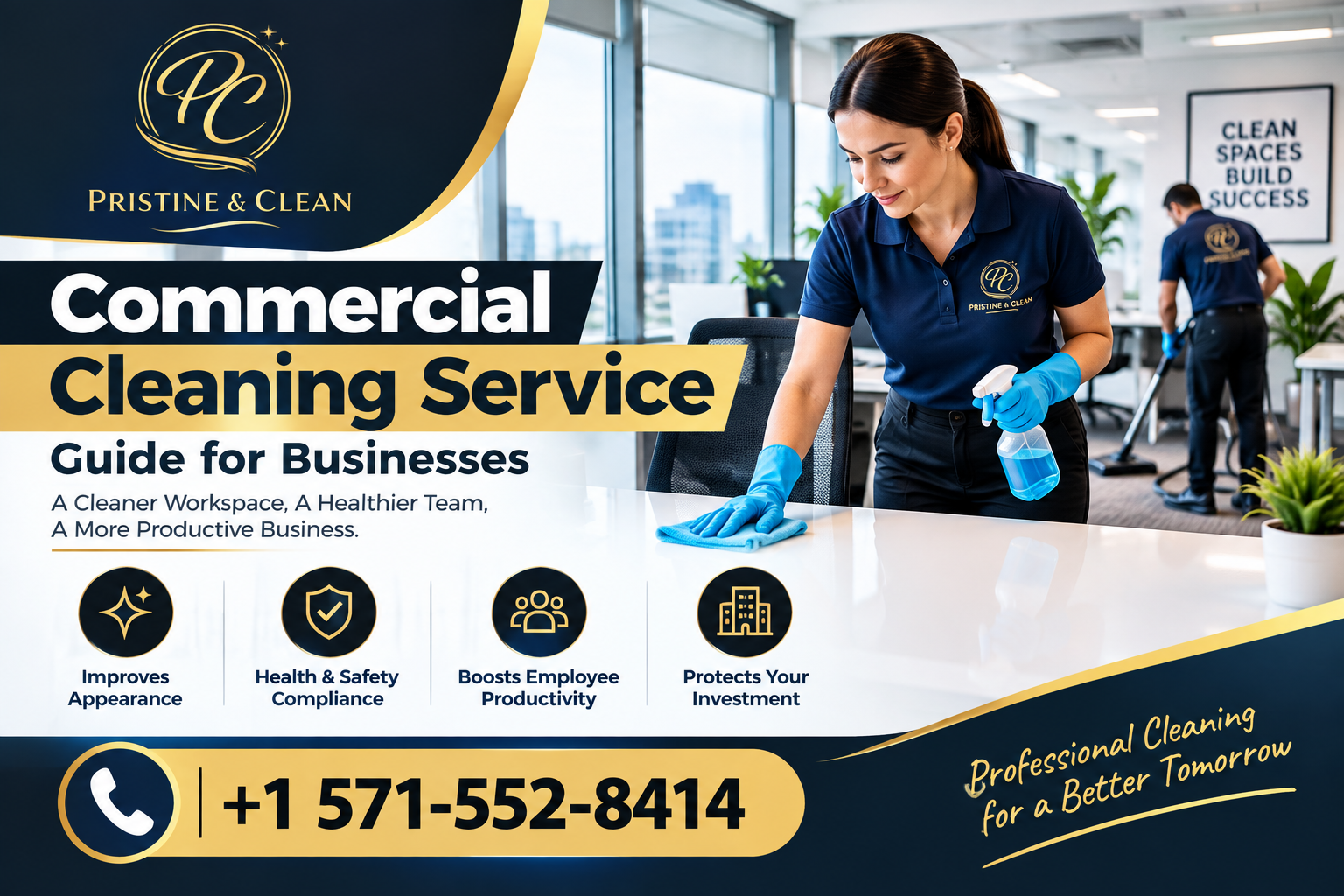
A Commercial Cleaning Service helps businesses maintain clean, organized, and welcoming workplaces without requiring employees to handle routine cleaning tasks themselves. From office buildings and retail stores to schools, restaurants, and professional facilities, reliable commercial cleaning can support a healthier and more comfortable environment.
A clean workplace is more than an attractive space. Regular cleaning helps manage dirt, dust, odors, and frequently touched surfaces while contributing to a professional experience for employees, customers, visitors, and clients.
For businesses considering professional cleaning services, understanding what commercial cleaning includes, how often it should be performed, and what to look for in a cleaning provider can make the decision much easier.
What Is a Commercial Cleaning Service?
A Commercial Cleaning Service is a professional cleaning solution designed specifically for workplaces and commercial properties. Unlike residential cleaning, commercial cleaning often involves larger spaces, higher foot traffic, specialized equipment, scheduled maintenance, and cleaning procedures designed around business operations.
Commercial cleaners may work before opening hours, after employees leave, during evenings, or according to a customized schedule that minimizes disruption.
Typical commercial cleaning can include:
- Office and workspace cleaning
- Restroom cleaning and sanitation
- Floor and carpet cleaning
- Dusting and surface cleaning
- Trash and recycling removal
- Breakroom and kitchen cleaning
- High-touch surface cleaning
- Window and glass cleaning
- Deep cleaning
- Disinfection services
- Post-event or special cleaning
The exact services depend on the facility, its size, traffic level, industry, and cleaning requirements.
Why Commercial Cleaning Matters
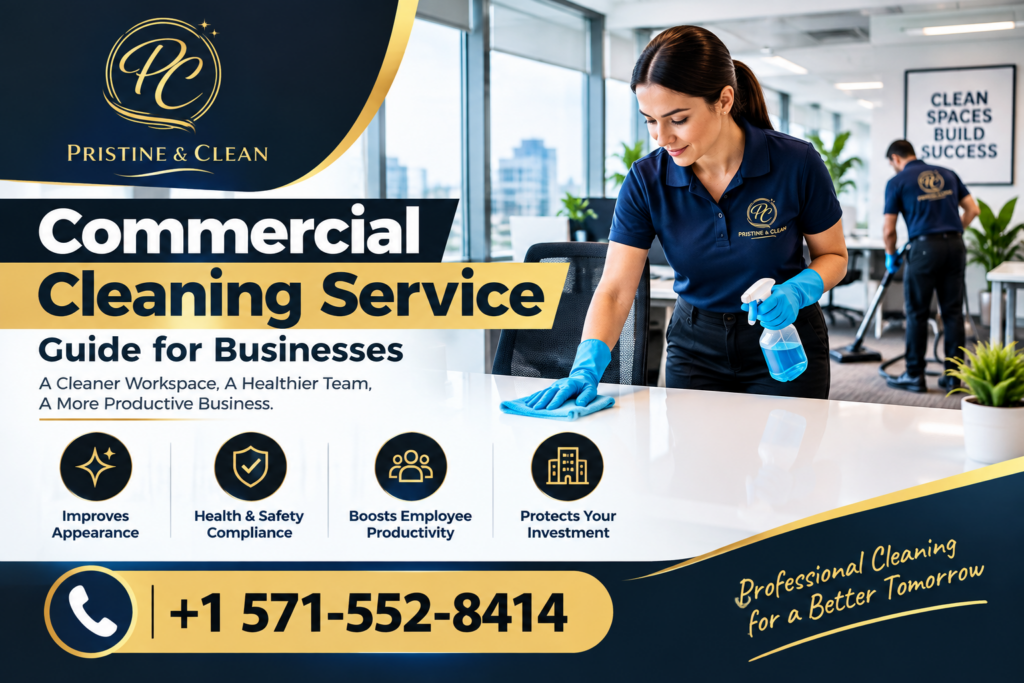
A professional environment creates an important first impression. Customers entering a dusty lobby, dirty restroom, or cluttered office may associate the condition of the facility with the business itself.
Regular Commercial Cleaning can help businesses maintain a consistent standard throughout the property. It can also reduce the accumulation of dust, dirt, food residue, and other contaminants.
The Centers for Disease Control and Prevention recommend regularly cleaning high-touch surfaces in community facilities and notes that cleaning with soap or detergent removes dirt and reduces the number of germs on surfaces. Disinfection may be appropriate when someone has been ill or in certain higher-risk situations.
This distinction is important because cleaning and disinfecting are not identical processes. Cleaning removes dirt and impurities, while disinfecting uses appropriate products to kill certain remaining germs.
What Does Commercial Cleaning Include?
A complete Cleaning Service can be customized according to the needs of a business.
Office Cleaning
Office cleaning may include desks, workstations, conference rooms, reception areas, floors, common areas, and frequently touched surfaces. Regular cleaning helps keep workspaces presentable and organized.
Restroom Cleaning
Restrooms require consistent attention because they receive frequent use throughout the day. Services may include cleaning toilets, sinks, counters, mirrors, floors, fixtures, and other commonly touched areas.
Floor and Carpet Cleaning
Floors experience constant traffic and can quickly collect dust, dirt, moisture, and debris. Depending on the flooring material, professional cleaning may involve vacuuming, mopping, carpet extraction, or other suitable methods.
Breakroom and Kitchen Cleaning
Commercial kitchens and employee breakrooms can accumulate food particles, grease, spills, and odors. Cleaning may include counters, sinks, appliances, tables, floors, and other relevant surfaces.
High-Touch Surface Cleaning
Door handles, light switches, elevator buttons, handrails, touchscreens, counters, and restroom fixtures can receive frequent contact. CDC guidance recommends regularly cleaning high-touch surfaces in facilities.
How Often Should a Business Be Cleaned?
There is no single schedule that works for every business. Cleaning frequency should reflect the type of facility, number of occupants, traffic level, activities performed, and areas requiring special attention.
A general schedule may include:
Daily cleaning: Restrooms, trash removal, high-traffic floors, breakrooms, and frequently touched surfaces.
Weekly cleaning: More detailed floor care, dusting, fixtures, and areas that do not require daily attention.
Monthly or periodic cleaning: Deep cleaning of selected areas, detailed floor care, high-level dusting, and other less frequent tasks.
Businesses with heavy foot traffic may require cleaning more frequently than low-traffic professional offices.
A professional cleaning provider can assess the facility and develop a schedule based on actual usage rather than applying the same routine to every business.
Commercial Cleaning vs. Regular In-House Cleaning
Many businesses rely on employees to handle basic cleaning tasks. While this may work for very small spaces, it can become difficult as a company grows.
Professional Services offer several practical advantages.
Employees can focus on their normal responsibilities instead of spending working time on cleaning. Professional cleaners can also bring specialized equipment, established procedures, and experience working across different commercial environments.
Another advantage is consistency. A structured cleaning plan can define what should be cleaned, when it should be cleaned, and which areas require additional attention.
However, businesses should still evaluate the scope of service carefully. A low-cost plan may not include the same frequency, equipment, or level of detail as a more comprehensive agreement.
How to Choose a Commercial Cleaning Company
Choosing the right Cleaning Service requires more than comparing prices.
Start by identifying exactly what your facility needs. Consider the building size, number of employees, operating hours, flooring types, restrooms, kitchens, high-traffic areas, and any industry-specific requirements.
Ask potential cleaning companies:
- What cleaning tasks are included in the service?
- How frequently will the property be cleaned?
- Are cleaning products and equipment included?
- Can the schedule be customized?
- How are quality checks handled?
- Are cleaners trained for safe chemical handling?
- Can the company accommodate special or deep-cleaning requests?
- How are concerns or service issues addressed?
Clear answers can help you compare Services based on value and scope rather than price alone.
Cleaning Chemicals and Workplace Safety
Commercial cleaning involves products and equipment that should be handled responsibly. OSHA identifies chemical exposure, ergonomic issues, falls, equipment, and other hazards among concerns relevant to the cleaning industry.
Cleaning companies should have appropriate procedures for chemical storage, labeling, handling, ventilation, and employee training. Safety Data Sheets can provide information about chemical hazards, protective equipment, first aid, and safe handling procedures.
Businesses should also avoid assuming that using more cleaning chemicals produces better results. Products should be used according to their labels and intended applications.
For example, CDC guidance states that disinfecting products should be used according to label instructions and that cleaning should generally occur before disinfection. Cleaning products and disinfectants should not be mixed because dangerous chemical reactions can occur.
What Makes a Commercial Cleaning Plan Effective?
An effective cleaning plan should be specific rather than vague.
A strong plan typically identifies:
- Areas to be cleaned
- Cleaning frequency
- Required cleaning methods
- Products and equipment
- High-priority surfaces
- Special cleaning requirements
- Quality-control procedures
- Communication procedures
It is also useful to review the plan periodically. Businesses change over time. New employees, renovations, expanded operating hours, increased customer traffic, or new facilities can change cleaning requirements.
Benefits of Professional Commercial Cleaning
Professional Commercial Cleaning can support several practical business goals.
A More Professional Appearance
Clean entrances, floors, offices, restrooms, and common areas help create a more organized environment for visitors and employees.
Consistent Cleaning
A scheduled Cleaning Service can provide a predictable routine instead of relying on employees to clean whenever they have spare time.
Better Use of Employee Time
Outsourcing routine cleaning allows employees to concentrate on their primary responsibilities.
Flexible Services
Commercial cleaning plans can often be adjusted according to business hours, building size, traffic, and changing needs.
Specialized Cleaning
Some facilities require deeper floor care, carpet cleaning, restroom sanitation, window cleaning, or other specialized Services that may be difficult to manage internally.
Questions to Ask Before Hiring a Cleaning Service
Before signing an agreement, request a clear description of the work. The proposal should explain the cleaning frequency, areas covered, included Services, special requests, and communication process.
It is also helpful to ask how the provider handles quality control. A professional approach should include a way to identify missed areas, respond to concerns, and maintain consistent service.
For larger facilities, businesses may also want to discuss after-hours access, security procedures, keys or access codes, and communication with facility managers.
FAQs
What is included in a Commercial Cleaning Service?
A Commercial Cleaning Service may include office cleaning, restroom care, floor and carpet cleaning, dusting, trash removal, breakroom cleaning, high-touch surface cleaning, window cleaning, deep cleaning, and disinfection. The exact scope depends on the building and the service agreement.
How often should Commercial Cleaning be performed?
The ideal frequency depends on foot traffic, building size, business type, number of occupants, and the activities performed inside the facility. Many businesses need daily cleaning for high-use areas, while other tasks can be scheduled weekly or periodically.
Is professional Commercial Cleaning worth it for a small business?
A professional Cleaning Service can be useful for small businesses when employees do not have enough time or resources to maintain the facility consistently. A customized plan can focus on high-priority areas while avoiding unnecessary services.
How do I choose the right Cleaning Service for my business?
Compare providers based on their service scope, cleaning frequency, safety practices, flexibility, communication, experience, and pricing. Ask for a detailed proposal so you can understand exactly which Services are included before making a decision.
Conclusion: Build a Cleaner Business Environment
A dependable Commercial Cleaning Service can help businesses maintain cleaner offices, restrooms, floors, common areas, and other high-use spaces. The right approach combines a practical cleaning schedule, appropriate products, trained personnel, safe work practices, and clear quality standards.
For businesses in Virginia and Maryland looking for professional cleaning support, Pristine and Cleaning can help develop a cleaning approach around the specific needs of the facility.
Contact Pristine and Cleaning to discuss your commercial cleaning requirements and create a practical service plan for your workplace.