
Why Mold Prevention Matters
The U.S. Environmental Protection Agency explains that moisture control is the key to controlling indoor mold. Fixing leaks, reducing humidity, improving ventilation, and drying wet materials promptly can help limit mold growth.
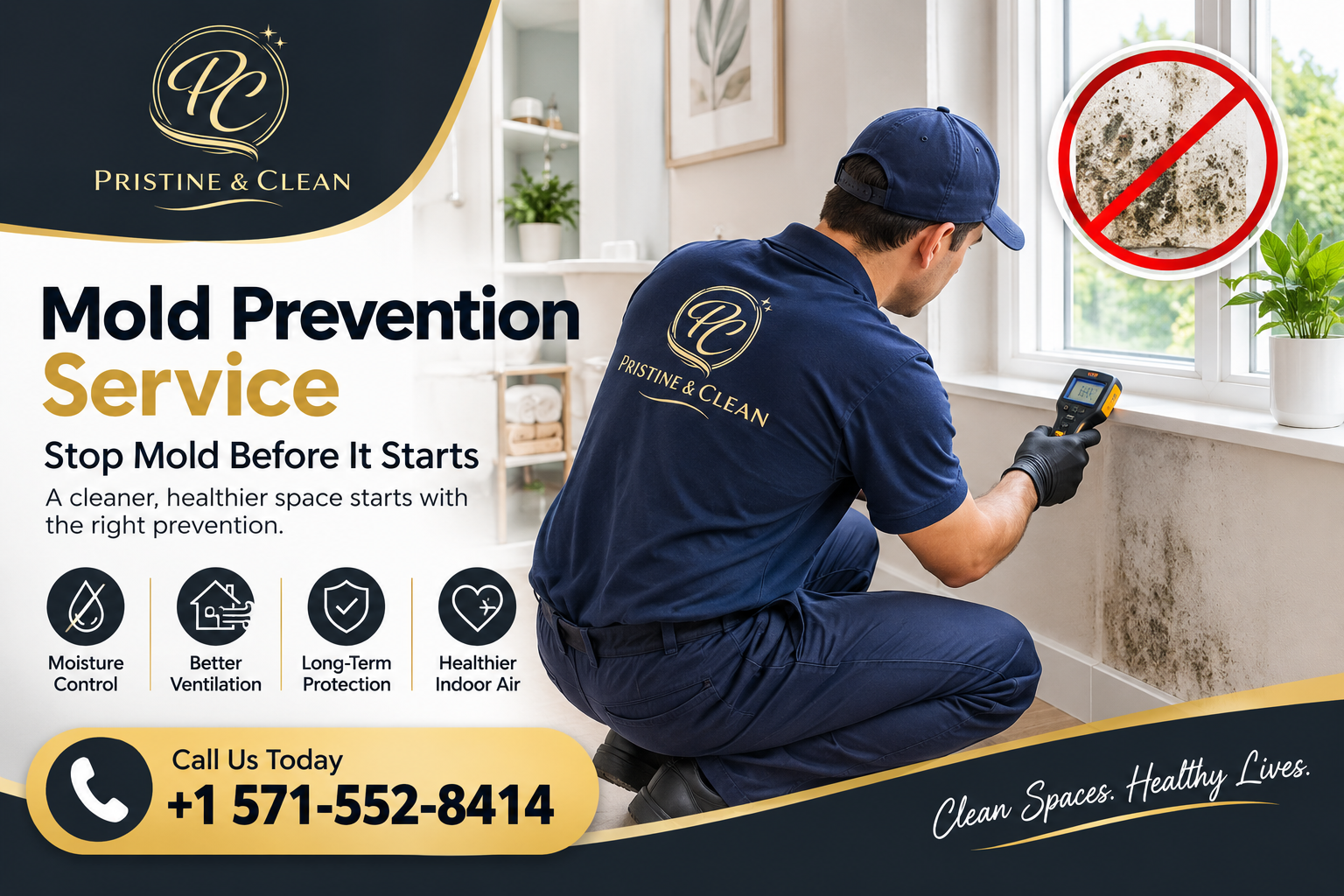
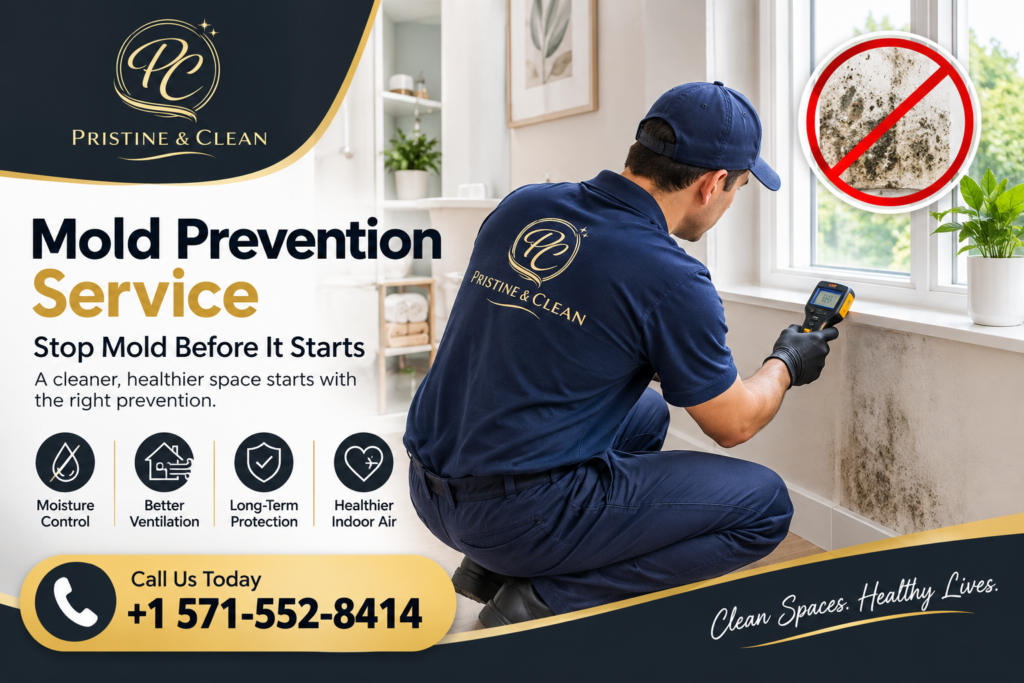
For homeowners and businesses, prevention is often more practical than waiting until visible mold or a musty odor becomes a recurring problem. A professional Mold Prevention Service can evaluate common moisture sources and help establish a cleaning and maintenance routine designed around the property’s specific conditions.
What Is a Mold Prevention Service?
A Mold Prevention Service is a professional approach to reducing the conditions that encourage mold growth. Rather than focusing only on visible spots, prevention looks at the underlying factors that may contribute to recurring moisture and mold.
Depending on the property, a prevention service may include:
- Inspecting areas prone to moisture and condensation
- Identifying visible signs of water intrusion
- Checking bathrooms, kitchens, basements, ceilings, and other vulnerable areas
- Reviewing ventilation and humidity concerns
- Cleaning areas where appropriate
Recommending moisture-control measures
- Helping establish a routine cleaning and maintenance plan
The exact service can vary according to the building, its age, construction materials, moisture history, and current condition.
Mold Prevention Starts with Moisture Control
The most important principle of Mold Prevention is simple: control moisture.
Mold spores can exist indoors without automatically becoming a mold problem. According to the EPA, mold growth occurs when spores encounter moisture and suitable materials. That means eliminating unnecessary moisture is central to long-term prevention.
Common moisture sources include:
- Plumbing leaks
- Roof leaks
- Flooding or water intrusion
- Condensation around windows and pipes
- High indoor humidity
- Poor bathroom ventilation
- Damp basements and crawl spaces
- Air-conditioning drainage problems
- Wet carpets or upholstery
- Moisture from cooking and showering
EPA guidance recommends keeping indoor relative humidity below 60%, with an ideal range of approximately 30% to 50% when possible.
Common Areas Where Mold Can Develop
Some parts of a property require more attention because they naturally experience higher humidity or moisture.
Bathrooms
Bathrooms produce substantial moisture through showers, baths, and sinks. Without adequate ventilation, moisture can settle on walls, ceilings, grout, and other surfaces.
Using exhaust fans that vent outdoors and addressing persistent condensation can help reduce the conditions that support mold.
Kitchens
Cooking, dishwashing, plumbing leaks, and poor ventilation can increase indoor humidity. Regular cleaning combined with proper ventilation can make the kitchen less favorable to mold growth.
Basements
Basements may experience water intrusion, condensation, or elevated humidity. Regular inspection and humidity management are particularly important in these areas.
Around Windows and Pipes
Condensation can form on cold surfaces when warm, humid air comes into contact with them. EPA guidance recommends reducing humidity and addressing cold surfaces where condensation repeatedly occurs.
Carpets and Upholstery
Absorbent materials can retain moisture for extended periods. If these materials become wet, quick drying is important. Materials that remain wet or become visibly moldy may require professional assessment or replacement.
How a Professional Prevention Service Can Help
A professional Prevention Service can provide a more systematic approach than occasional household cleaning.
Instead of simply treating a visible area, the process can consider why moisture is present and whether similar conditions exist elsewhere.
A typical service may involve an initial property assessment, identification of moisture-prone areas, cleaning recommendations, ventilation considerations, and preventive maintenance guidance.
This approach is especially useful for properties that have experienced:
- Previous water damage
- Recurring condensation
- Plumbing leaks
- Basement dampness
- Persistent musty odors
- Repeated mold growth
- Poor ventilation
- Flooding or water intrusion
The goal is not to claim that every property can be completely free of mold spores. The EPA notes that eliminating all indoor mold spores is not practical. Instead, effective prevention focuses on controlling moisture and promptly addressing mold growth when it occurs.
What to Do After Water Damage
Fast action following water damage can make a significant difference.
EPA guidance recommends drying wet areas and materials within approximately 24 to 48 hours, when possible, to help prevent mold growth.
After a leak, spill, or flooding event:
- Stop the source of water if it is safe to do so.
- Remove standing water.
- Increase ventilation where appropriate.
- Dry affected materials thoroughly.
- Check nearby walls, flooring, ceilings, and furnishings.
- Watch for musty odors or visible mold.
- Address the underlying moisture source rather than only cleaning the surface.
For major water damage, contaminated water, or extensive mold growth, professional assessment may be appropriate. EPA guidance specifically recommends additional professional consideration when mold covers more than about 10 square feet or when substantial water damage has occurred.
Mold Prevention vs. Mold Cleanup
These services are related but not identical.
Mold prevention focuses on reducing the conditions that allow mold to develop. This includes moisture management, ventilation, humidity control, and regular maintenance.
Mold cleanup addresses mold that is already present.
If visible mold exists, simply applying a product to the affected area may not solve the underlying problem. EPA guidance emphasizes that the moisture issue should also be corrected; otherwise, mold may return.
This distinction is important for homeowners looking for a long-term solution rather than temporary surface treatment.
Is Mold Testing Always Necessary?
Mold testing is not automatically required for every situation. The CDC states that it does not recommend routine mold testing because identifying the specific type or quantity of mold does not necessarily change the basic need to remove mold and correct the moisture problem.
For many properties, visible mold, moisture problems, water damage, and musty odors provide useful information for determining the next steps.
When there is extensive damage, hidden moisture, HVAC concerns, or other unusual circumstances, a qualified professional can help determine whether additional assessment is appropriate.
Why Choose Pristine and Cleaning?
Pristine and Cleaning provides cleaning and property-care services designed around the practical needs of residential and commercial spaces.
When addressing Mold Prevention Service needs, a prevention-focused approach can help property owners pay attention to moisture-prone areas before recurring problems become more difficult to manage.
A professional cleaning plan can complement everyday maintenance by focusing on cleanliness, ventilation considerations, moisture awareness, and the condition of commonly affected areas.
For properties with a history of moisture or mold concerns, consistent maintenance can be an important part of keeping indoor spaces cleaner and more comfortable.
Simple Mold Prevention Tips for Property Owners
Mold prevention does not depend entirely on professional service. Regular property maintenance also plays an important role.
Keep these habits in your routine:
- Repair plumbing and roof leaks promptly.
- Keep indoor humidity under control.
- Use bathroom and kitchen exhaust fans.
- Dry wet materials as quickly as possible.
- Keep air-conditioning drain lines and drip pans maintained.
- Watch for condensation around windows and pipes.
- Improve airflow in damp areas.
- Inspect basements and other moisture-prone spaces regularly.
The CDC similarly recommends controlling humidity, improving airflow, repairing leaks, and drying wet areas quickly to reduce mold growth.
FAQs
What does a Mold Prevention Service include?
A Mold Prevention Service generally focuses on identifying moisture-prone areas, improving preventive cleaning practices, addressing conditions that encourage mold growth, and recommending practical moisture-control measures. The exact service depends on the property’s condition, history of water damage, ventilation, humidity, and areas of concern.
How can Mold Prevention help stop recurring mold?
Mold Prevention works primarily by controlling the conditions that allow mold to grow. Fixing leaks, reducing excessive humidity, improving ventilation, and drying wet materials promptly can reduce moisture availability. If existing mold is present, it should also be properly addressed rather than relying only on preventive cleaning.
What humidity level helps prevent mold?
The EPA recommends keeping indoor relative humidity below 60%, ideally between 30% and 50% when possible. A simple humidity meter can help property owners monitor indoor conditions. If humidity remains consistently high, an air conditioner, dehumidifier, ventilation improvements, or professional evaluation may be appropriate.
When should I hire a mold prevention service?
Consider professional help when mold repeatedly returns, moisture problems are difficult to identify, a property has experienced water damage, or damp conditions persist despite routine cleaning. Extensive mold growth or significant water damage may also require professional assessment and remediation guidance.
Conclusion: Take Action Before Mold Returns
Effective Mold Prevention Service is about more than cleaning visible spots. Long-term prevention starts with controlling moisture, improving ventilation, addressing leaks, monitoring humidity, and responding quickly to water damage.
If your home or commercial property has recurring moisture concerns, musty odors, or areas where mold repeatedly develops, Pristine and Cleaning can help you develop a practical cleaning and prevention approach.
Contact Pristine and Cleaning to learn more about professional cleaning and mold prevention solutions for your property.