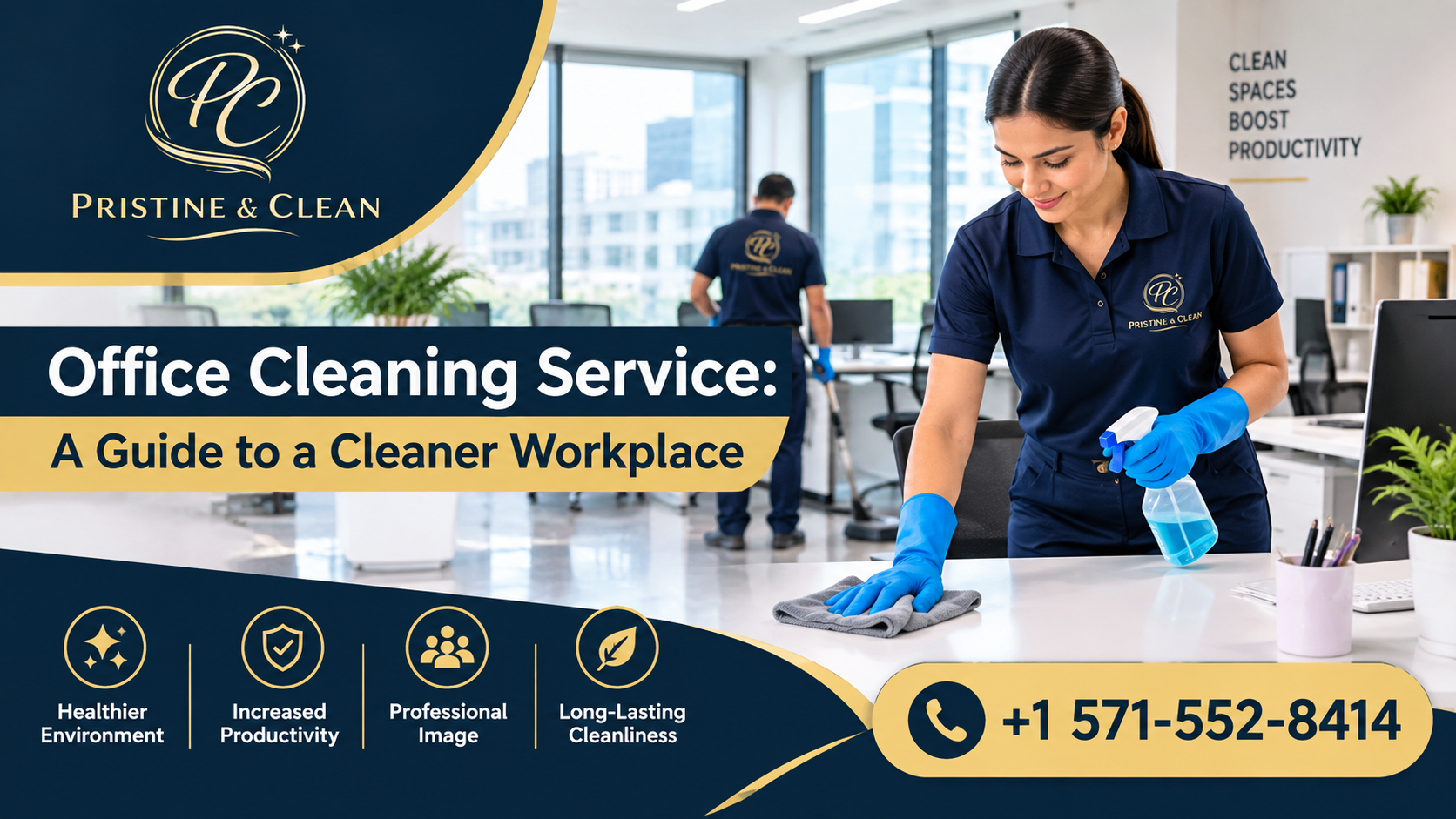
An Office Cleaning Service provides professional cleaning and maintenance for workplaces, including offices, conference rooms, reception areas, kitchens, restrooms, floors, windows, and common spaces. A well-planned cleaning routine helps maintain a professional environment while reducing dirt, dust, odors, and buildup.
For businesses, cleanliness is more than appearance. Employees and visitors interact with frequently touched surfaces throughout the day, so consistent cleaning can play an important role in maintaining a healthier workplace.
The CDC recommends regularly cleaning high-touch surfaces in community facilities such as offices and businesses. In most situations, regular cleaning is enough, while disinfection may be appropriate when someone has been sick or when specific circumstances call for it.
For businesses looking for dependable Cleaning Service options, professional office care can provide a consistent approach that is difficult to maintain through occasional cleaning alone.
Why Regular Office Cleaning Matters
A busy workplace can accumulate dust, fingerprints, food particles, spills, and general debris surprisingly quickly. Employees may also touch desks, keyboards, door handles, light switches, phones, elevator buttons, and shared equipment throughout the day.
A regular Office Cleaning Service helps address these areas before dirt and buildup become noticeable.
A clean workplace can contribute to:
- A more professional first impression
- Better-looking workspaces
- Reduced dust and surface buildup
- Cleaner restrooms and break rooms
- More organized common areas
- Improved employee comfort
- Better maintenance of floors, furniture, and fixtures
Cleanliness also supports workplace presentation. When customers, clients, vendors, or prospective employees enter an office, the condition of the environment can influence how they perceive the business.
What Does an Office Cleaning Service Include?
The exact scope depends on the size and type of workplace, but professional office Services commonly cover several areas.
Workstations and Desks
Workstations can collect dust, crumbs, fingerprints, and other debris. Cleaning may include dusting accessible surfaces, wiping appropriate areas, emptying wastebaskets, and vacuuming surrounding floors.
Electronic equipment requires additional care. Keyboards, monitors, phones, and other devices should be cleaned according to manufacturer instructions to avoid damage.
Reception and Waiting Areas
Reception areas often create the first impression of a business. Professional cleaning can include dusting furniture, cleaning accessible surfaces, vacuuming or mopping floors, removing trash, and addressing visible fingerprints or marks.
Conference Rooms
Conference rooms frequently experience high use because employees and visitors share tables, chairs, presentation equipment, and other surfaces.
Regular Cleaning can help keep these spaces prepared for meetings and presentations.
Kitchens and Break Rooms
Office kitchens can require frequent attention because food preparation, spills, coffee stations, refrigerators, counters, sinks, and trash containers can quickly become dirty.
A routine should focus on appropriate surfaces and areas that experience frequent use.
Restrooms
Restroom cleaning typically involves toilets, sinks, counters, mirrors, floors, fixtures, dispensers, and waste containers. Regular attention is particularly important because these areas experience frequent daily traffic.
Floors and Carpets
Floors receive constant foot traffic. Depending on the surface, professional Services may include vacuuming, sweeping, mopping, spot treatment, and periodic deeper cleaning.
Carpet care can also help remove accumulated dust and visible stains while maintaining the appearance of the workplace.
How Often Should an Office Be Cleaned?
There is no single schedule that works for every office. Cleaning frequency should reflect factors such as employee numbers, visitor traffic, office size, business type, and the amount of shared space.
A small office with limited daily traffic may require a different schedule from a large workplace with multiple departments and frequent visitors.
A practical approach may include:
| Area | Suggested Attention |
| High-touch surfaces | Regularly throughout the cleaning schedule |
| Restrooms | Daily or based on traffic |
| Break rooms | Daily or frequent cleaning |
| Workstations | Routine cleaning |
| Floors | Based on surface and foot traffic |
| Carpets | Routine vacuuming with periodic deep cleaning |
| Windows | Periodic cleaning |
| Common areas | Regular cleaning based on usage |
The CDC specifically recommends regularly cleaning high-touch surfaces and cleaning other surfaces when visibly dirty.
The right Office Cleaning Service schedule should therefore be customized rather than based only on a standard checklist.
Cleaning vs. Sanitizing vs. Disinfecting
These terms are sometimes used interchangeably, but they have different meanings.
Cleaning removes dirt, dust, impurities, and many germs from surfaces.
Sanitizing reduces germs on a surface to levels considered safe according to applicable public health standards.
Disinfecting uses chemicals designed to kill harmful germs that remain on surfaces after cleaning.
The CDC recommends cleaning surfaces before sanitizing or disinfecting because dirt and other material can interfere with these processes.
Disinfection is not automatically required for every office surface every day. The appropriate approach depends on the workplace, circumstances, and product instructions.
High-Touch Areas Deserve Special Attention
Some workplace surfaces receive much more contact than others. These can include:
- Door handles
- Light switches
- Shared desks
- Countertops
- Restroom fixtures
- Elevator buttons
- Phones
- Frequently used equipment
- Touchscreens
- Shared kitchen surfaces
These areas should be incorporated into the cleaning plan because frequent contact can make them more likely to become dirty.
A professional Cleaning Service can identify high-traffic and high-touch areas and build them into a consistent maintenance routine.
Choosing the Right Cleaning Products
The products used in an office matter. Businesses may want to consider products that are appropriate for the surface, effective for the intended purpose, and used according to label instructions.
The EPA’s Safer Choice program helps businesses identify cleaning products that meet specific criteria related to ingredient safety, performance, and environmental considerations. EPA notes that Safer Choice-certified products are available for facilities including offices.
In addition, cleaning staff should follow proper product labels, safety instructions, ventilation requirements, and protective equipment recommendations.
Cleaning chemicals should never be mixed unless the product instructions specifically allow it. The CDC also recommends proper training and appropriate protective equipment for workers handling cleaning and disinfecting products.
Professional Office Cleaning vs. DIY Cleaning
Many businesses rely on employees for basic tidying, but employee cleaning and professional office cleaning serve different purposes.
Employees can handle simple tasks such as organizing personal workspaces or cleaning up after meals. A professional service can provide a structured routine covering the broader workplace.
This distinction can be particularly useful for businesses that want employees to focus on their actual responsibilities instead of spending work hours performing routine facility maintenance.
A professional Office Cleaning Service can also establish a predictable schedule, checklist, and cleaning scope based on the workplace’s needs.
How to Choose an Office Cleaning Service
When comparing cleaning providers, businesses should look beyond the basic price.
Consider whether the company provides:
- A clearly defined cleaning checklist
- Flexible scheduling
- Properly trained cleaning personnel
- Appropriate cleaning products and equipment
- Experience with commercial workplaces
- Clear communication
- Consistent quality standards
- Services that can be customized as workplace needs change
It is also useful to ask which areas are included, how frequently cleaning is performed, and whether additional services are available for carpets, windows, floors, or special cleaning requirements.
The goal is to choose a Cleaning Service that fits the actual needs of the workplace rather than simply selecting the lowest-cost option.
Building a Practical Office Cleaning Routine
A successful office cleaning program should be consistent and easy to monitor.
Start by identifying the areas that need daily attention. Next, determine which tasks can be completed weekly or periodically. High-touch areas should receive regular attention, while less frequently used surfaces can follow a different schedule.
The routine should also account for seasonal changes, increased visitor traffic, office events, renovations, and situations where additional disinfection may be appropriate.
For larger workplaces, a documented checklist can help maintain consistency between cleaning visits.
Why Businesses Choose Pristine and Cleaning
At Pristine and Cleaning, the goal is to help businesses maintain clean, presentable, and comfortable workplace environments through dependable professional cleaning solutions.
Every office has different requirements. A professional cleaning plan can be adapted around the size of the workplace, traffic levels, frequently used areas, and preferred cleaning schedule.
Whether a business needs regular office maintenance or additional cleaning support for specific areas, working with an experienced provider can make workplace upkeep more organized and manageable.
FAQs
What is included in an Office Cleaning Service?
An Office Cleaning Service may include dusting, vacuuming, mopping, restroom cleaning, trash removal, break-room cleaning, workstation care, common-area cleaning, and attention to high-touch surfaces. Exact services vary according to the office, cleaning schedule, building requirements, and customized service plan.
How often should an Office Cleaning Service visit?
The ideal frequency depends on office size, employee numbers, visitor traffic, business type, and the amount of shared space. Many workplaces benefit from regular cleaning throughout the week, while smaller offices may require fewer visits. High-traffic areas generally need more frequent attention than low-use spaces.
Does office cleaning include disinfection?
Office cleaning and disinfection are different processes. Routine cleaning removes dirt and reduces germs, while disinfection uses appropriate products to kill remaining germs. The CDC recommends cleaning before disinfecting and using disinfection when circumstances warrant it, such as when someone has been sick.
Why hire a professional Cleaning Service for an office?
A professional Cleaning Service provides a structured approach to workplace maintenance. Instead of relying entirely on employees, businesses can use scheduled cleaning to maintain common areas, restrooms, floors, workspaces, and other frequently used areas. Professional cleaning can also be customized according to the workplace’s traffic and specific needs.
Conclusion: Keep Your Workplace Ready
A clean office creates a more organized, welcoming, and professional environment for employees, customers, and visitors. From workstations and conference rooms to restrooms, kitchens, floors, and high-touch surfaces, consistent cleaning helps businesses maintain their facilities throughout the year.
Choosing the right Office Cleaning Service means considering cleaning frequency, workplace size, traffic, service scope, products, and scheduling requirements.
Pristine and Cleaning can help businesses develop a practical cleaning routine designed around their workplace needs.
Contact Pristine and Cleaning to learn more about professional office cleaning services and create a cleaning schedule that works for your business.