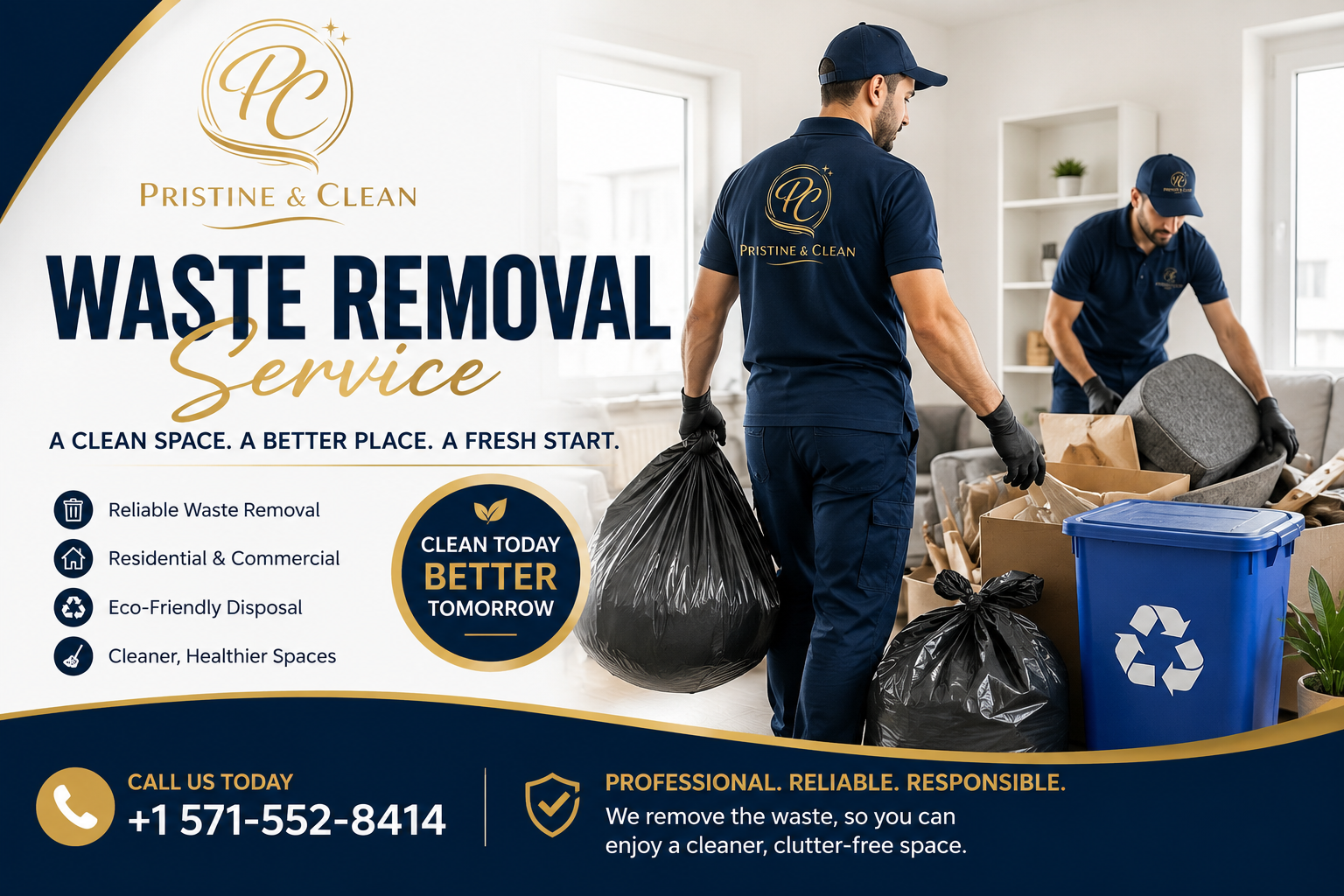
A Waste Removal Service helps homeowners, tenants, landlords, offices, and commercial properties collect, remove, and properly manage unwanted waste. Instead of allowing rubbish, unwanted items, renovation debris, or accumulated materials to take up valuable space, professional waste removal makes the cleanup process more organized and convenient.
Waste can build up for many reasons. A move-out, renovation, office clearance, seasonal cleaning project, event, property turnover, or simple de cluttering can quickly create more waste than a household or business can handle through regular trash collection.
For properties that need more than routine cleaning, waste removal and cleaning can work together. Removing unwanted materials first gives cleaners better access to floors, corners, storage areas, kitchens, offices, and other spaces that need attention.
At Pristine and Cleaning, waste removal can be viewed as an important part of maintaining a clean, functional, and presentable property.
Why Is Waste Removal Important?
Waste removal is not simply about making a property look tidy. Accumulated rubbish can interfere with normal use of a space and may create sanitation or workplace concerns.
The Occupational Safety and Health Administration states that workplaces should be kept clean as far as the nature of the work allows, while waste should be removed as necessary to maintain sanitary conditions.
For businesses, keeping passageways and working areas clear is also important. OSHA specifically addresses the regular removal of debris and waste in construction and repair environments.
Regular waste removal can help:
- Free up usable space
- Reduce clutter around the property
- Prepare rooms for deep cleaning
- Support cleaner work areas
- Make moving and property turnover easier
- Improve the overall appearance of a home or business
- Make renovation and cleanup projects easier to manage
The goal is straightforward: remove unwanted materials responsibly so the property can be cleaned, used, or prepared for its next purpose.
What Types of Waste Can Be Removed?
The type of waste accepted by a Waste Removal Service depends on the provider, local regulations, and the disposal facility being used.
Common non-hazardous materials may include household rubbish, unwanted furniture, cardboard, packaging, general debris, office waste, and items accumulated during de cluttering or property clean outs.
Waste removal may also be useful after:
Home De cluttering
Large amounts of unwanted household items can quickly overwhelm regular garbage collection. A planned removal service can help clear rooms, garages, basements, storage areas, and other spaces.
Moving or Moving Out
Moving often leaves behind furniture, boxes, packaging, broken items, and unwanted possessions. Removing these materials can make a property easier to clean and prepare for its next occupant.
Renovation and Remodeling
Construction and renovation projects can generate substantial amounts of debris. OSHA requires construction areas to have debris cleared from work areas, passageways, and stairs, with combustible debris removed regularly.
Office Clean outs
Businesses may accumulate old furniture, packaging, paper, equipment, and miscellaneous items. Clearing these materials can make an office easier to reorganize and clean.
Property Turnovers
Landlords, property managers, and cleaning teams may need waste removal between tenants. Removing abandoned or unwanted items before cleaning can make the turnover process more efficient.
Waste Removal and Cleaning: How They Work Together
Waste Removal Services and cleaning services often address different stages of the same property-maintenance process.
Waste removal focuses on taking unwanted materials out of the property. Cleaning focuses on removing dirt, dust, stains, residue, and other contaminants from the remaining surfaces.
For example, imagine an apartment after a tenant moves out. Furniture, boxes, bags, and unwanted household items may still be inside. Cleaning those areas thoroughly is difficult when the rooms are crowded.
A practical sequence is:
- Identify items that need to be removed.
- Separate reusable, recyclable, and disposable materials where appropriate.
- Remove permitted waste from the property.
- Clear floors, rooms, storage spaces, and access areas.
- Complete the required cleaning.
- Inspect the property before it is returned to normal use.
This approach can be particularly useful for move-out cleaning, deep cleaning, office cleaning, and property turnover.
How Does Professional Waste Removal Work?
A typical Waste Removal Service begins with an assessment of the materials that need to be removed. The service provider can determine the approximate volume, type of waste, access requirements, and appropriate disposal route.
After the materials are identified, the waste is collected and loaded for transportation. Depending on the material, appropriate disposal, recycling, donation, or recovery options may be considered.
The U.S. Environmental Protection Agency emphasizes reducing, reusing, and recycling materials where possible. Its current recycling guidance also explains that recyclable materials generally move through collection, processing, and re manufacturing stages.
This means responsible waste management is not necessarily about sending everything directly to a landfill. Some materials may have another useful destination.
What Should Not Go into Regular Waste?
Not every unwanted item should be placed in ordinary rubbish.
Household hazardous waste can include certain paints, cleaners, oils, batteries, pesticides, solvents, and other products that may be flammable, corrosive, reactive, or toxic. The EPA advises checking local requirements and using appropriate collection or disposal programs for these materials.
For this reason, customers should tell a waste removal provider about unusual or potentially hazardous materials before collection.
Items such as chemicals, certain batteries, fuels, asbestos-containing materials, medical waste, and other regulated materials may require specialized handling. Disposal rules can also differ by state and locality.
When in doubt, contact the appropriate local waste management or environmental agency rather than placing questionable materials in regular trash.
When Should You Consider Waste Removal Services?
There is no single schedule that works for every property. The right timing depends on the amount and type of waste being generated.
You may want to arrange waste removal when:
- A home is being de cluttered
- A tenant has moved out
- Furniture or large unwanted items need to be cleared
- An office is being reorganized
- A renovation has generated debris
- A property requires a clean out
- A commercial space is preparing for a new tenant
- Waste has accumulated beyond normal collection capacity
For businesses, regular removal may be appropriate when waste is generated continuously. For households, an occasional service may be enough for larger cleanup projects.
How to Choose a Waste Removal Service
Choosing a waste removal provider involves more than finding someone who can take items away.
First, confirm what materials the company accepts. This helps prevent problems when the service arrives.
Next, ask how recyclable or reusable materials are handled. A responsible approach should distinguish between ordinary waste and materials that may have another disposal or recovery option.
It is also useful to clarify the service scope before booking. Ask whether loading, transportation, cleanup after removal, and disposal are included.
Finally, consider whether the service fits your wider cleaning needs. If a property needs both waste removal and detailed cleaning, coordinating the two can make the overall project easier to manage.
Waste Removal for Businesses
Commercial properties have different waste challenges from residential properties. Offices, retail spaces, hospitality businesses, warehouses, and other workplaces may generate waste throughout the day.
Keeping waste under control supports a more organized environment. OSHA’s workplace sanitation requirements include provisions for waste receptacles and regular waste removal where necessary to maintain sanitary conditions.
A commercial waste removal plan can therefore become part of broader facility maintenance rather than an occasional emergency task.
Businesses should also consider the nature of their waste. Ordinary office rubbish is different from chemicals, industrial materials, electronic equipment, or other regulated items. Proper classification helps determine the appropriate disposal route.
Environmentally Responsible Waste Removal
Waste management increasingly involves more than simply getting rid of unwanted materials.
The EPA encourages people to reduce waste, reuse items where possible, and recycle suitable materials. Its 2026 guidance provides resources covering recycling, composting, electronics, batteries, food waste, and other common material streams.
For property owners, a simple approach is to consider whether an item can be:
Reduced: Avoid unnecessary purchases and excess materials.
Reused: Give usable furniture, containers, or household items another purpose.
Recycled: Separate materials that are accepted by local recycling programs.
Disposed of: Send genuinely unusable materials through an appropriate waste stream.
This approach can reduce unnecessary waste while making property clean outs more organized.
FAQ
What does a Waste Removal Service do?
A Waste Removal Service collects and removes eligible unwanted materials from homes, offices, commercial properties, and other locations. Depending on the provider and local rules, materials may be transported for disposal, recycling, reuse, or another appropriate waste-management process.
How often should I use a Waste Removal Service?
The frequency depends on how much waste your property generates. A household may only need waste removal during de cluttering, moving, or renovation, while a business may require scheduled service. Regular removal can help prevent excessive accumulation and keep spaces manageable.
Can a Waste Removal Service remove hazardous waste?
Not necessarily. Hazardous materials often require specialized handling and disposal. The EPA recommends checking local requirements for materials such as paints, solvents, pesticides, oils, and batteries. Always confirm accepted materials with the service provider before collection.
Is Waste Removal included with cleaning services?
Waste Removal Service and cleaning are related but different services. Waste removal generally focuses on taking unwanted materials away, while cleaning focuses on dirt, dust, stains, and surface sanitation. Some companies may offer both, allowing customers to coordinate the entire property cleanup.
Conclusion: Make Cleanup Easier
A Waste Removal Service can make residential and commercial cleanup projects easier by removing unwanted materials before they become a larger problem. From move-outs and de cluttering to office clean outs and renovation debris, organized waste removal helps create more usable spaces and supports a cleaner property.
Responsible disposal also matters. Materials should be handled according to their type and applicable local requirements, while reusable and recyclable items should be considered whenever appropriate.
If your property needs waste removal followed by professional cleaning, Pristine and Cleaning can help you plan the cleanup process around your property’s needs. Contact Pristine and Cleaning to discuss your waste removal and cleaning requirements and take the next step toward a cleaner, more organized space.