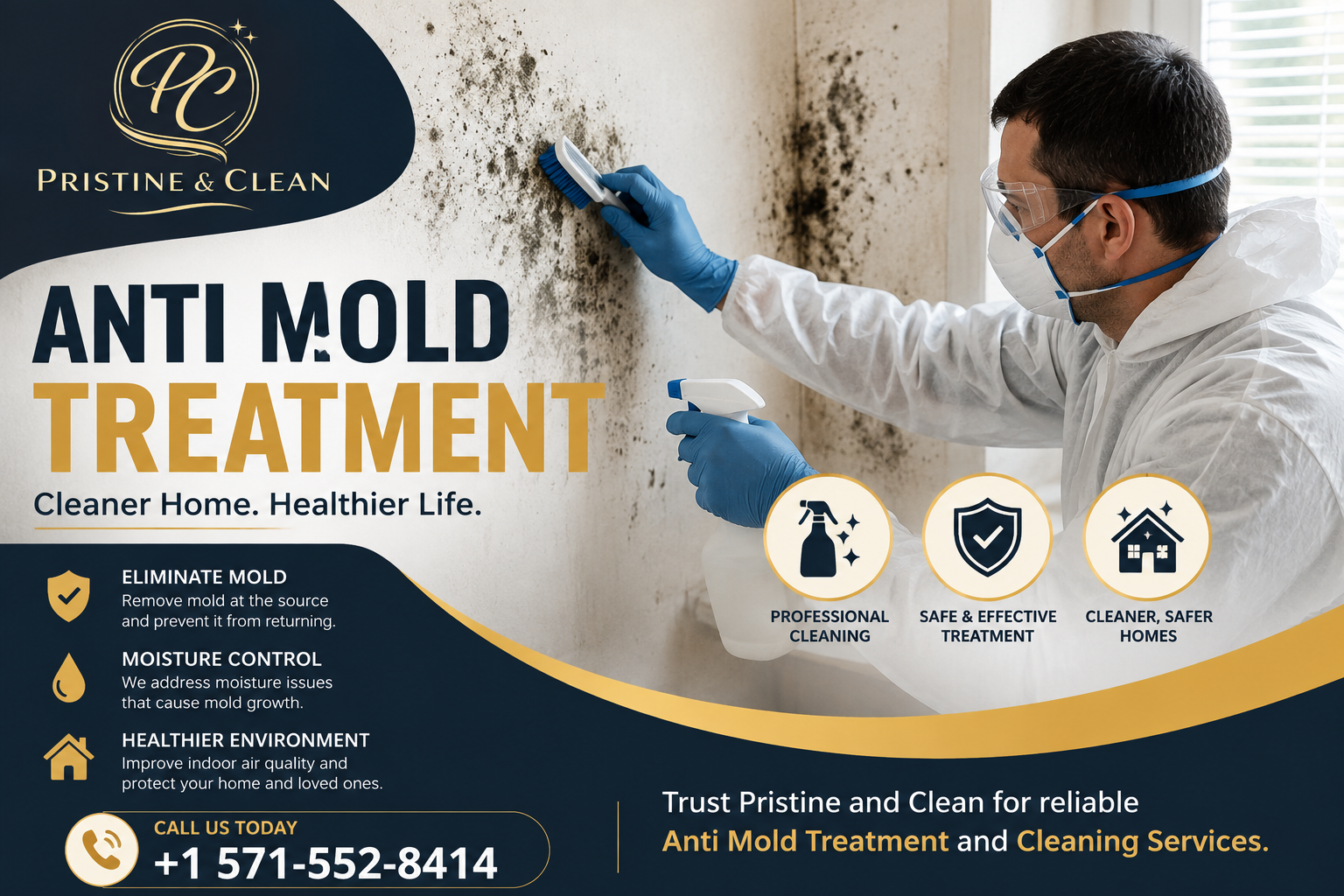
Anti Mold Treatment is an important part of maintaining a cleaner, healthier indoor environment when excess moisture allows mold to grow. Mold can appear on walls, ceilings, bathrooms, carpets, windows, and other damp areas, often becoming a recurring problem if the underlying moisture source is not addressed.
For homeowners and property managers, effective mold cleaning involves more than simply wiping away visible growth. The process should identify the source of moisture, remove affected mold, dry the area thoroughly, and take practical steps to reduce the chance of future growth.
According to the U.S. Environmental Protection Agency (EPA), moisture control is the key to controlling indoor mold. Mold can begin growing when spores land on damp surfaces, so addressing water leaks, condensation, and excess humidity is essential.
For professional cleaning needs, Pristine and Cleaning can help property owners address difficult cleaning conditions and maintain cleaner indoor spaces.
What Is Anti Mold Treatment?
Anti Mold Treatment refers to a combination of cleaning, moisture control, drying, and preventive measures used to address existing mold and reduce conditions that encourage it to return.
Mold spores naturally exist indoors and outdoors, so completely eliminating every spore is not realistic. The goal is to prevent spores from finding the moisture they need to grow.
A practical Anti Mold Treatment approach typically includes:
- Identifying visible or suspected mold growth
- Finding the moisture or water source
- Cleaning affected hard surfaces
- Drying damp materials thoroughly
- Addressing leaks and condensation
- Improving ventilation where appropriate
- Controlling indoor humidity
- Replacing porous materials when they cannot be adequately cleaned
This approach is more effective than simply covering mold with paint or using a product that only addresses the surface.
What Causes Mold Growth Indoors?
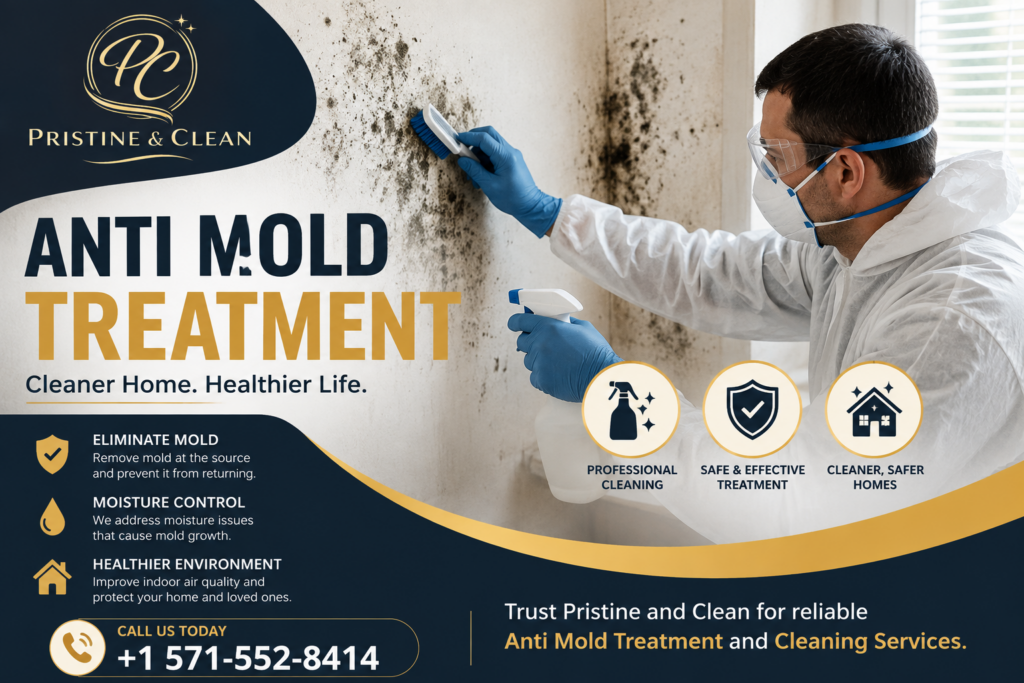
Mold needs moisture to grow. Common indoor sources include plumbing leaks, roof leaks, flooding, condensation, high humidity, poor ventilation, and water-damaged building materials.
Bathrooms and kitchens are particularly susceptible because normal activities such as showering, cooking, and washing dishes introduce moisture into the air. Basements, crawl spaces, laundry areas, and rooms with poor ventilation can also develop conditions that encourage mold.
The EPA recommends keeping indoor relative humidity below 60%, with an ideal range of approximately 30% to 50% when possible. Dehumidifiers, air conditioning, exhaust fans, and better ventilation can help manage excess moisture.
Common Warning Signs
Mold is not always immediately obvious. Look for:
- Musty or earthy odors
- Dark, green, white, gray, or brown patches
- Persistent dampness
- Water stains on ceilings or walls
- Peeling paint or wallpaper
- Condensation around windows
- Repeated mold growth in bathrooms
- Damp carpets or upholstery
A recurring musty odor can be particularly useful as a warning sign when visible mold is difficult to locate.
Why Cleaning Alone May Not Solve a Mold Problem
One of the most important things to understand about Anti Mold Treatment is that cleaning visible mold without correcting the moisture problem may only provide a temporary improvement.
For example, if a bathroom wall repeatedly becomes damp because of poor ventilation, wiping the wall may remove visible growth, but the same conditions can allow mold to return.
The EPA states that mold cleanup should be accompanied by correction of the water or moisture problem.
This is why a complete cleaning approach considers both the visible contamination and the environmental conditions that support it.
How Does Anti Mold Treatment Work?
A practical treatment and cleaning process generally follows several stages.
1. Identify the Problem
The first step is determining where mold is visible and whether there are signs of hidden moisture. Walls, ceilings, floors, windows, bathrooms, HVAC areas, and other damp locations may need attention.
2. Find the Moisture Source
A leaking pipe, roof problem, condensation, flooding, or high indoor humidity can keep surfaces damp. The underlying source should be addressed as part of the cleanup process.
3. Clean Affected Surfaces
For appropriate hard surfaces, the EPA recommends cleaning mold with detergent and water and then drying the area completely.
Porous materials can be more difficult because mold may penetrate spaces that cannot be effectively cleaned. In some circumstances, affected carpet, ceiling tiles, insulation, or other absorbent materials may need replacement.
4. Dry the Area Thoroughly
Drying is a critical part of mold control. The EPA recommends drying wet or damp areas and materials within 24 to 48 hours, when possible, to reduce the opportunity for mold growth.
5. Reduce Future Moisture
After cleaning, focus on prevention. Improve ventilation, repair leaks, control humidity, and address condensation.
This turns mold cleaning from a short-term surface task into a more complete moisture-management strategy.
DIY Mold Cleaning vs. Professional Cleaning Services
Small areas of mold on suitable hard surfaces may sometimes be handled by homeowners using appropriate precautions and cleaning methods.
However, professional Cleaning Services may be appropriate when the affected area is extensive, there has been significant water damage, contaminated water is involved, or mold may be hidden inside building materials.
The EPA notes that areas larger than approximately 10 square feet may warrant consultation with a professional, particularly when substantial water damage is involved.
Professional assistance can also be useful when:
- Mold keeps returning after cleaning
- The source of moisture is difficult to identify
- Large areas are affected
- Porous materials are heavily contaminated
- Flooding or sewage caused the damage
- Mold may be present in an HVAC system
- The area is difficult to access safely
CDC guidance also recommends considering experienced and qualified professionals for difficult or potentially hazardous mold cleanup situations.
Is Bleach Necessary for Anti Mold Treatment?
Bleach is not automatically required for every mold-cleaning situation. The EPA states that routine use of biocides such as chlorine bleach is not generally recommended for mold cleanup. In many cases, cleaning hard surfaces with detergent and water followed by thorough drying is appropriate.
If disinfectants or other cleaning chemicals are used, follow the product label and provide appropriate ventilation. Never mix bleach with ammonia or other incompatible cleaning products because dangerous fumes can form.
The important principle is not simply to kill mold. Mold and mold-contaminated material should be appropriately removed, while the moisture problem is corrected.
How to Prevent Mold from Coming Back
Effective Anti-Mold Treatment should always include prevention.
Keep indoor areas dry and pay attention to early signs of moisture. Repair plumbing and roof leaks promptly. Use bathroom and kitchen exhaust fans to remove moisture, and consider a dehumidifier when indoor humidity remains high.
The EPA also recommends addressing condensation and improving air circulation around cold surfaces.
Simple preventive habits include:
- Repair leaks promptly
- Keep humidity under control
- Improve bathroom ventilation
- Use exhaust fans while cooking and showering
- Dry wet materials quickly
- Monitor areas prone to condensation
- Keep gutters and drainage systems maintained
- Avoid allowing damp carpets or fabrics to remain wet
- Inspect areas after water damage
These steps can significantly reduce the conditions that allow mold to establish itself.
When Should You Consider Anti Mold Cleaning Services?
Consider professional cleaning services when mold is widespread, repeatedly returning, associated with substantial water damage, or located in areas that are difficult to clean safely.
A recurring problem can indicate an unresolved moisture issue rather than simply inadequate surface cleaning. Professional assessment and cleaning can help determine what areas need attention and whether affected materials can be cleaned or should be replaced.
At Pristine and Cleaning, maintaining clean indoor spaces involves addressing the conditions that make difficult cleaning problems more likely. A professional cleaning service can be a practical option when mold-related cleaning goes beyond routine household maintenance.
Anti Mold Treatment and Indoor Air Quality
Mold can affect indoor air quality because mold spores can become airborne. The EPA notes that mold exposure may be associated with allergic reactions, asthma, and other respiratory complaints.
This does not mean every mold situation creates the same health risk. However, visible mold, persistent dampness, and musty odors are good reasons to investigate the underlying moisture problem.
If someone experiences symptoms they believe are related to mold exposure, the EPA recommends consulting a medical professional.
Why Choose Pristine and Cleaning?
Mold-related cleaning requires attention to detail because simply making a surface look clean does not necessarily address the conditions that allowed mold to grow.
Pristine and Cleaning focuses on practical cleaning solutions designed around the condition of the space. For properties dealing with damp areas, recurring buildup, or difficult cleaning requirements, professional cleaning can help restore cleaner and more manageable indoor environments.
A thorough approach considers visible conditions, affected surfaces, moisture concerns, and ongoing cleaning needs rather than relying on a single product or quick surface treatment.
FAQ
What is Anti Mold Treatment?
Anti Mold Treatment is an approach that combines mold cleaning with moisture control and preventive measures. It may involve removing visible mold from appropriate surfaces, drying affected areas, fixing leaks, reducing humidity, and improving ventilation. The goal is to address both existing growth and the conditions that encourage mold to return.
How often should Anti Mold Treatment be done?
There is no universal schedule for Anti Mold Treatment because mold growth depends on moisture, ventilation, building conditions, and previous water damage. If mold repeatedly appears, investigate the underlying moisture source rather than simply scheduling repeated surface cleaning.
Can cleaning remove mold permanently?
Cleaning can remove visible mold from appropriate surfaces, but mold may return if the moisture problem remains. The EPA emphasizes that controlling moisture is central to mold control. Fixing leaks, reducing humidity, improving ventilation, and drying damp materials are important parts of long-term prevention.
When should I hire professional Cleaning Services for mold?
Professional Cleaning Services may be appropriate when mold covers a large area, follows significant water damage, affects porous materials, keeps returning, or may involve contaminated water or an HVAC system. For larger or complicated problems, professional assistance can provide a safer and more practical approach.
Conclusion: Take Mold Problems Seriously
Anti Mold Treatment is most effective when cleaning and moisture control are addressed together. Removing visible mold is only part of the process. Finding leaks, controlling humidity, improving ventilation, drying damp materials, and maintaining clean surfaces can help reduce the conditions that support recurring mold growth.
For homeowners and property managers facing difficult mold-related cleaning concerns, Pristine and Cleaning can provide professional cleaning support tailored to the needs of the property.
If you have recurring mold, damp areas, or a cleaning problem that has become difficult to manage, contact Pristine and Cleaning to discuss your cleaning needs and determine the appropriate next step.