
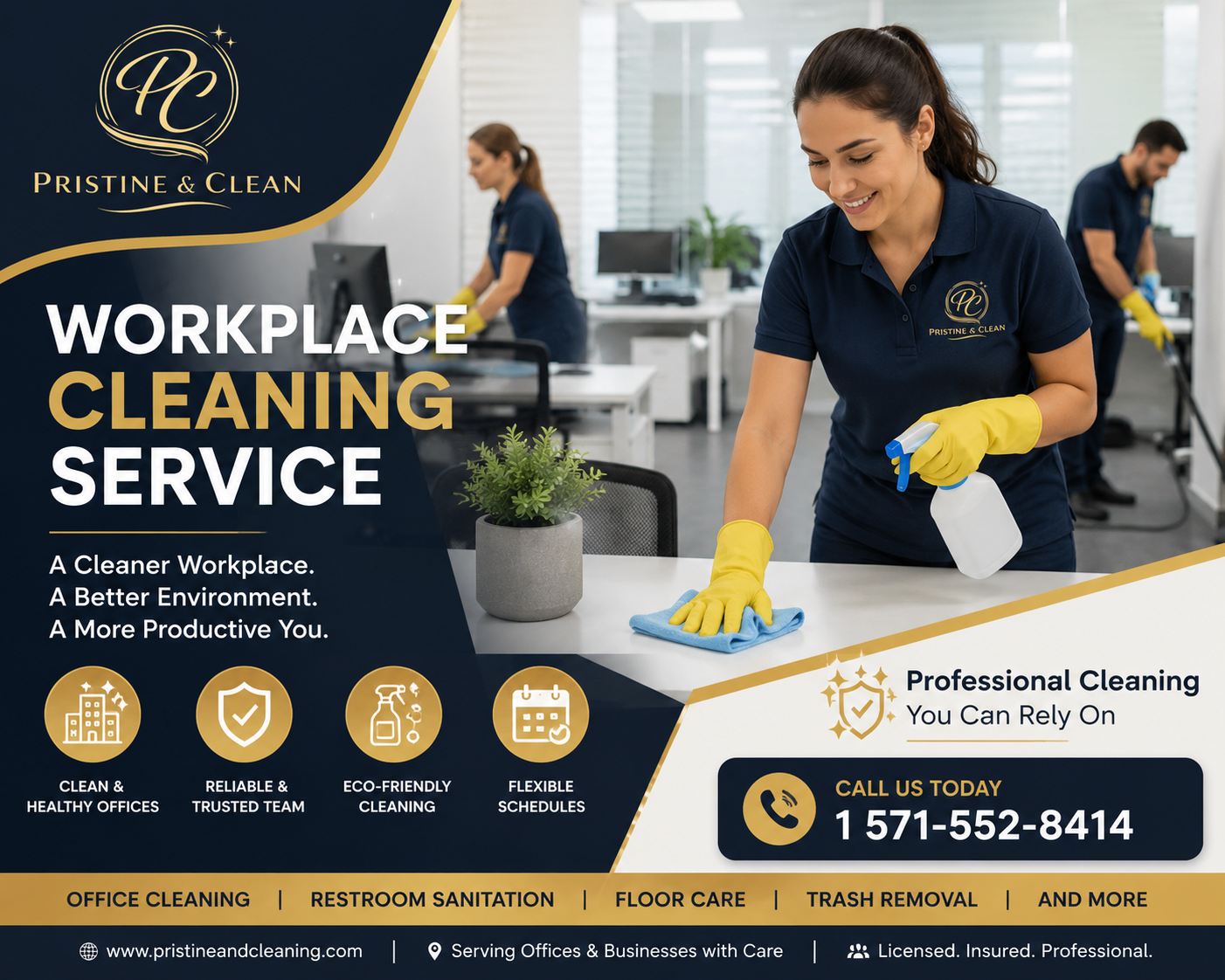
A Workplace Cleaning Service helps businesses maintain clean, organized, and comfortable working environments without placing the responsibility on employees. From office desks and floors to restrooms, kitchens, meeting rooms, and shared spaces, professional cleaning supports a workplace that is ready for employees, customers, and visitors every day.
Modern workplaces need more than occasional dusting and vacuuming. High-touch surfaces, shared equipment, food areas, waste, flooring, and indoor air quality all require consistent attention. A structured Workplace Cleaning program can help businesses maintain daily cleanliness while addressing areas that are often overlooked.
What Is a Workplace Cleaning Service?
A Workplace Cleaning Service is a professional cleaning program designed specifically for offices, commercial buildings, and other work environments. Depending on the facility, services may include routine cleaning, restroom sanitation, floor care, dusting, trash removal, breakroom cleaning, surface cleaning, and periodic deep cleaning.
The goal is straightforward: keep the workplace clean, presentable, functional, and comfortable while allowing employees to focus on their regular responsibilities.
A professional cleaning plan can be customized around the size of the facility, number of employees, traffic levels, operating hours, and specific cleaning requirements.
OSHA states that permanent workplaces should be kept clean to the extent that the nature of the work allows, while waste should be removed as often as necessary to maintain sanitary conditions.
Why Workplace Cleaning Matters
A clean workplace influences more than appearance. Employees and visitors interact with desks, doors, floors, restrooms, kitchens, conference rooms, elevators, and other shared areas throughout the day.
Regular cleaning can help control accumulated dust, dirt, food debris, unpleasant odors, and general clutter. It can also support better workplace organization and create a more welcoming environment for clients and visitors.
Indoor air quality is another important consideration. OSHA notes that routine cleaning of office spaces and common areas, proper storage of cleaning chemicals, and appropriate building maintenance can contribute to better indoor air quality management.
For businesses, this means cleaning should be viewed as part of regular facility maintenance rather than an occasional cosmetic task.
What Does Workplace Cleaning Include?
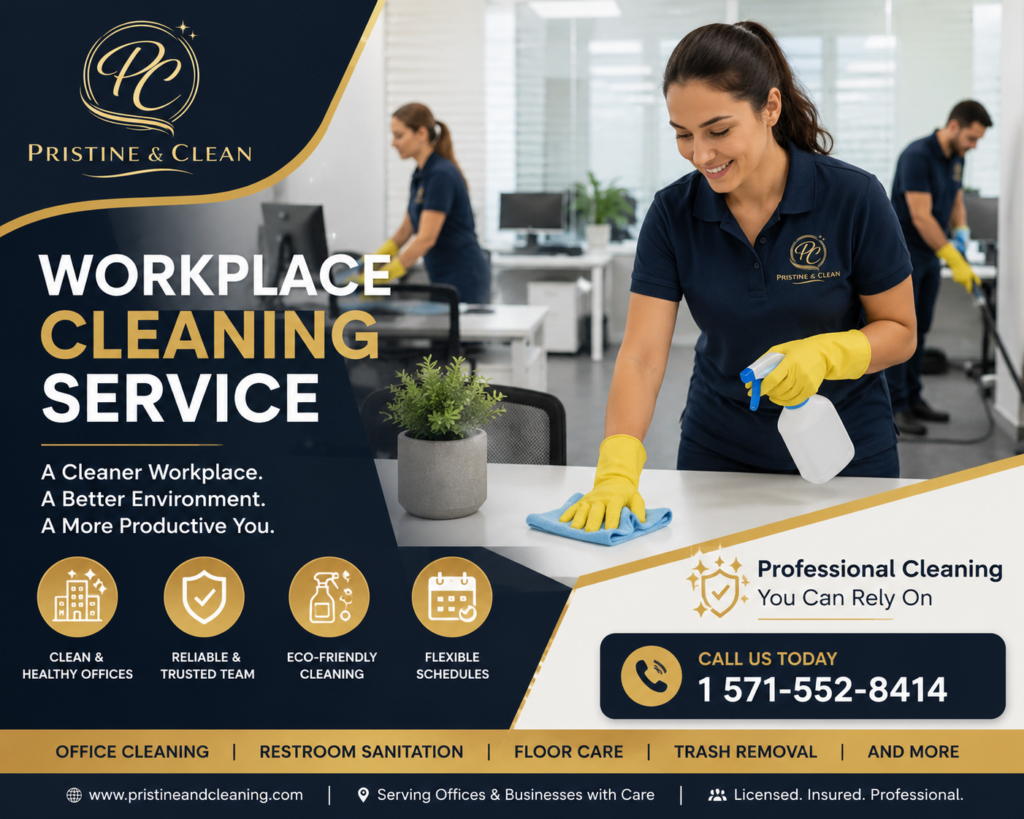
The exact scope of Services depends on the workplace, but a comprehensive cleaning program commonly covers the following areas.
Office and Work Areas
Cleaning teams can dust desks, tables, shelves, partitions, and other accessible surfaces. Floors can be vacuumed or mopped according to their material, while visible waste is collected and removed.
Shared workspaces may require particular attention because multiple employees use the same furniture and equipment throughout the day.
Restroom Cleaning
Restrooms require consistent cleaning because they experience frequent use. A workplace cleaning routine may include:
- Cleaning toilets, sinks, counters, and fixtures
- Mopping and maintaining restroom floors
- Cleaning mirrors
- Removing waste
- Restocking soap, paper products, and other supplies
- Addressing unpleasant odors
OSHA requires workplace washing facilities to be maintained in a sanitary condition and requires appropriate hand-cleaning supplies to be available.
Breakroom and Kitchen Cleaning
Breakrooms can quickly accumulate food crumbs, spills, grease, trash, and odors. Routine cleaning may include countertops, tables, sinks, floors, cabinet exteriors, and frequently touched surfaces.
Businesses may also schedule deeper cleaning for appliances, cabinets, floors, and other areas according to their needs.
Floors and Carpets
Floor care is an important part of Workplace Cleaning because floors collect dirt brought in from outside.
Depending on the flooring, cleaning may include vacuuming carpets, sweeping hard floors, damp mopping, spot treatment, and periodic deep floor cleaning.
EPA guidance recommends routinely vacuuming carpets and fabric-covered furniture, dusting hard surfaces with a damp cloth, and damp-mopping floors as part of maintaining indoor environments.
High-Touch Surfaces
Frequently touched areas can receive additional attention during routine cleaning. Examples include door handles, light switches, shared tables, railings, faucet handles, and other commonly used surfaces.
It is important to understand that cleaning, sanitizing, and disinfecting are not identical processes. EPA explains that cleaning removes dirt and organic matter; while sanitizing and disinfecting involve specific antimicrobial actions.
Workplace Cleaning Service vs. In-House Cleaning
Some businesses handle cleaning internally, while others use professional cleaning companies. Both approaches can work, but the right choice depends on the organization’s size, staffing, schedule, and facility requirements.
An in-house approach may require employees or dedicated staff to manage supplies, schedules, equipment, waste, restrooms, floors, and ongoing maintenance.
A Workplace Cleaning Service allows businesses to establish a defined cleaning schedule and assign these responsibilities to a dedicated service provider.
For many organizations, outsourcing can also make it easier to create separate daily, weekly, and periodic cleaning routines rather than relying on occasional cleaning.
How Often Should a Workplace Be Cleaned?
There is no single schedule that works for every workplace. Cleaning frequency should reflect building usage, employee numbers, visitor traffic, type of business, and the amount of dirt or waste generated.
A typical schedule may include:
Daily cleaning: Restrooms, trash removal, breakrooms, floors in high-traffic areas, and frequently used surfaces.
Weekly cleaning: Detailed dusting, less frequently used areas, interior glass, and additional floor care.
Periodic deep cleaning: Carpet cleaning, detailed floor care, high-level dusting, hard-to-reach areas, and other tasks that are not necessary every day.
A workplace with heavy foot traffic may need more frequent cleaning than a small office with limited daily occupancy.
Choosing the Right Workplace Cleaning Service
Businesses should look beyond a simple list of cleaning tasks when comparing cleaning providers.
Consider whether the company offers a clear service schedule, communicates effectively, understands commercial environments, and can adapt its approach as workplace needs change.
It is also useful to ask about:
- Cleaning frequency and service hours
- Areas included in the service
- Cleaning products and equipment
- Restroom and breakroom maintenance
- Floor and carpet care
- Waste removal
- Quality-control procedures
- Additional or periodic cleaning options
A trustworthy provider should also explain what is included rather than making vague promises.
OSHA maintains specific resources for the cleaning industry, including guidance concerning cleaning chemicals and worker safety.
Cleaning Products and Indoor Air Quality
Cleaning products should be selected and used carefully. More product does not necessarily mean better cleaning.
EPA advises following product-label instructions, using the correct dilution where applicable, avoiding chemical mixing, and increasing ventilation when cleaning or disinfecting.
Businesses interested in reducing exposure to certain chemicals can also consider products carrying the EPA Safer Choice label. The program helps purchasers identify products that meet its standards for safer ingredients while maintaining performance requirements.
A professional cleaning plan should therefore consider both cleaning performance and responsible product use.
How Professional Cleaning Supports a Better Workplace
Workplace Cleaning is ultimately about maintaining an environment where people can work comfortably and businesses can operate efficiently.
A consistent cleaning routine can help:
- Maintain a professional appearance
- Reduce visible dust and accumulated dirt
- Keep restrooms and breakrooms sanitary
- Support organized shared spaces
- Maintain floors, carpets, and other surfaces
- Create a welcoming environment for visitors
- Reduce the burden of routine cleaning on employees
Cleaning does not replace proper ventilation, building maintenance, workplace safety practices, or other facility-management measures. Instead, it works alongside them as one part of a broader workplace maintenance strategy.
Why Choose Pristine and Cleaning?
At Pristine and Cleaning, workplace cleaning can be tailored around the specific needs of your commercial environment. Instead of applying exactly the same routine to every building, a practical cleaning plan can focus on the areas that receive the most use and require regular attention.
Whether you need recurring office cleaning, restroom maintenance, breakroom cleaning, floor care, dusting, or periodic deep cleaning, a structured service can help keep your workplace ready for employees and visitors.
The right cleaning schedule should fit your operating hours, facility size, traffic level, and priorities.
FAQs About Workplace Cleaning Service
1. What is included in a Workplace Cleaning Service?
A Workplace Cleaning Service can include office cleaning, dusting, vacuuming, mopping, restroom cleaning, breakroom cleaning, trash removal, surface cleaning, and floor care. The exact scope depends on the building and service schedule. Businesses can also arrange periodic deep cleaning for areas requiring additional attention.
2. How often should a Workplace Cleaning Service visit?
The ideal frequency depends on workplace size, occupancy, foot traffic, and the type of business. Many offices benefit from routine cleaning several times per week or daily service. High-traffic workplaces may require more frequent attention to restrooms, floors, waste, and shared surfaces.
3. Why is Workplace Cleaning important for businesses?
Workplace Cleaning helps maintain a professional and orderly environment while addressing dust, dirt, waste, restroom sanitation, and commonly used areas. Consistent cleaning can also reduce the amount of routine maintenance employees need to handle themselves and help create a more welcoming environment for staff and visitors.
4. Can Workplace Cleaning Services be customized?
Yes. A Workplace Cleaning Service can be organized around the facility’s size, operating schedule, number of employees, traffic levels, and cleaning priorities. Businesses can request different frequencies for daily cleaning, restroom care, floor maintenance, breakroom cleaning, and periodic deep-cleaning tasks.
Conclusion: Keep Your Workplace Ready Every Day
A clean workplace is an important part of maintaining a professional and functional business environment. From offices and meeting rooms to restrooms, breakrooms, floors, and shared spaces, regular Workplace Cleaning helps keep everyday areas maintained and ready for use.
With a structured Workplace Cleaning Service, businesses can establish a practical cleaning routine without making routine janitorial tasks part of employees’ daily responsibilities.
Pristine and Cleaning can help businesses develop a cleaning approach suited to their workplace. Contact Pristine and Cleaning to discuss your workplace cleaning needs and create a service schedule that fits your facility.